
Filming for Vertical Screens: Composition, Movement, and Mobile Viewing
Filming for Vertical Screens: Composition, Movement, and Mobile Viewing
10/13/26
Vertical video has become an increasingly important part of professional video production. Platforms such as Instagram Reels, TikTok, and YouTube Shorts are built around full-screen vertical viewing, while brands are also increasingly commissioning vertical content for social media campaigns and other digital applications.
At Moktan, we have seen a clear shift in the types of projects we are being asked to produce. In the past, a common approach was to shoot primarily in 16:9 and then create a small number of vertical social media deliverables by cropping the original footage. Increasingly, clients are asking us to shoot specifically vertically from the beginning.
This changes the production process. Vertical video is not simply horizontal video cropped into a different shape. The aspect ratio affects composition, camera movement, interview coverage, location selection, and even how we think about what information needs to remain visible on screen.
The Shift Toward Vertical Video
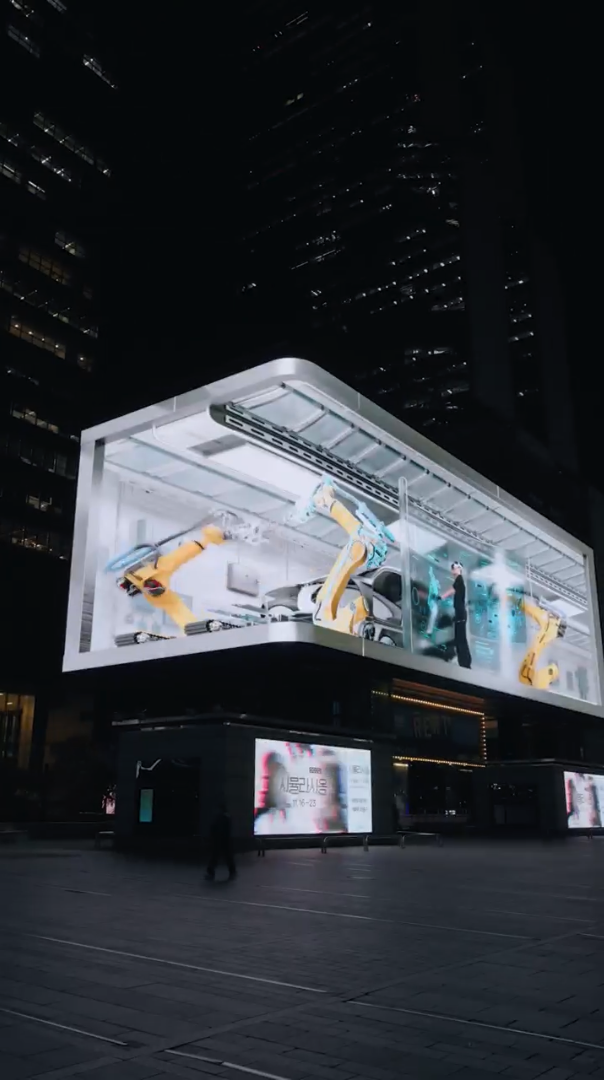
360 promotional campaign for Dassault Systèmes
For many years, 16:9 was the default format for professional video production. A typical project might have been filmed in 16:9 for a website, television, YouTube, or corporate presentation, with a few additional social media versions created from the same footage.
This workflow is still useful when a project needs to serve multiple formats. However, the increasing importance of mobile-first platforms has changed the balance.
Instagram Reels, TikTok, and YouTube Shorts all use vertical, full-screen formats, making 9:16 a standard format for short-form mobile content.
As a result, we are receiving more requests where vertical video is not an additional deliverable, but one of the primary formats the production is designed around.
This distinction matters. If a video is intended to be vertical from the outset, the camera and creative decisions can be made specifically for that frame rather than trying to find a suitable vertical composition inside footage that was designed for 16:9.
The Characteristics of Vertical Video
A 16:9 frame provides a lot of horizontal space. It naturally accommodates wide landscapes, groups of people, horizontal architecture, and subjects moving across the frame.
A 9:16 frame does almost the opposite. It provides significantly more vertical space while restricting the amount of information that can comfortably exist from left to right.
This creates both limitations and opportunities.
Tall buildings, doorways, trees, people standing, staircases, columns, and other vertical structures can work particularly well. Wide landscapes, long horizontal signs, large groups, and compositions that depend on several subjects being spread across the frame can be much harder to communicate.
The question is therefore not simply whether something fits inside a 9:16 frame. It is whether the composition actually benefits from being vertical.

Promotional video for Clarendelle Wines and Margo Grill filmed at the JW Marriott in Seoul
Composing for a Narrower Frame
Vertical framing requires more deliberate control over where subjects are positioned.
In a horizontal frame, two people can comfortably sit beside one another, leaving enough space around them to establish their environment. In a vertical frame, placing the same two people side by side can make both subjects relatively small.
This becomes particularly important for interviews and conversations.
Balancing the Vertical Frame
While keeping the primary and most important information anchored toward the vertical middle keeps the viewer's attention focused where it matters, a tall 9:16 frame requires careful management of the upper and lower regions.
We avoid letting the top and bottom feel like dead empty space or cluttered distractions. Instead, we create a natural, aesthetic frame by utilizing the foreground, middleground, and background to occupy the top and bottom portions of the shot. This ensures the subject in the middle never feels awkwardly sandwiched between vast empty voids, creating depth and dimension within the narrow frame.
Separating Interview Angles
For an interview between two people, a horizontal production might use a wide two-shot showing both the interviewer and interviewee in the same frame.
With vertical video, we will often bias toward separate angles for each person.
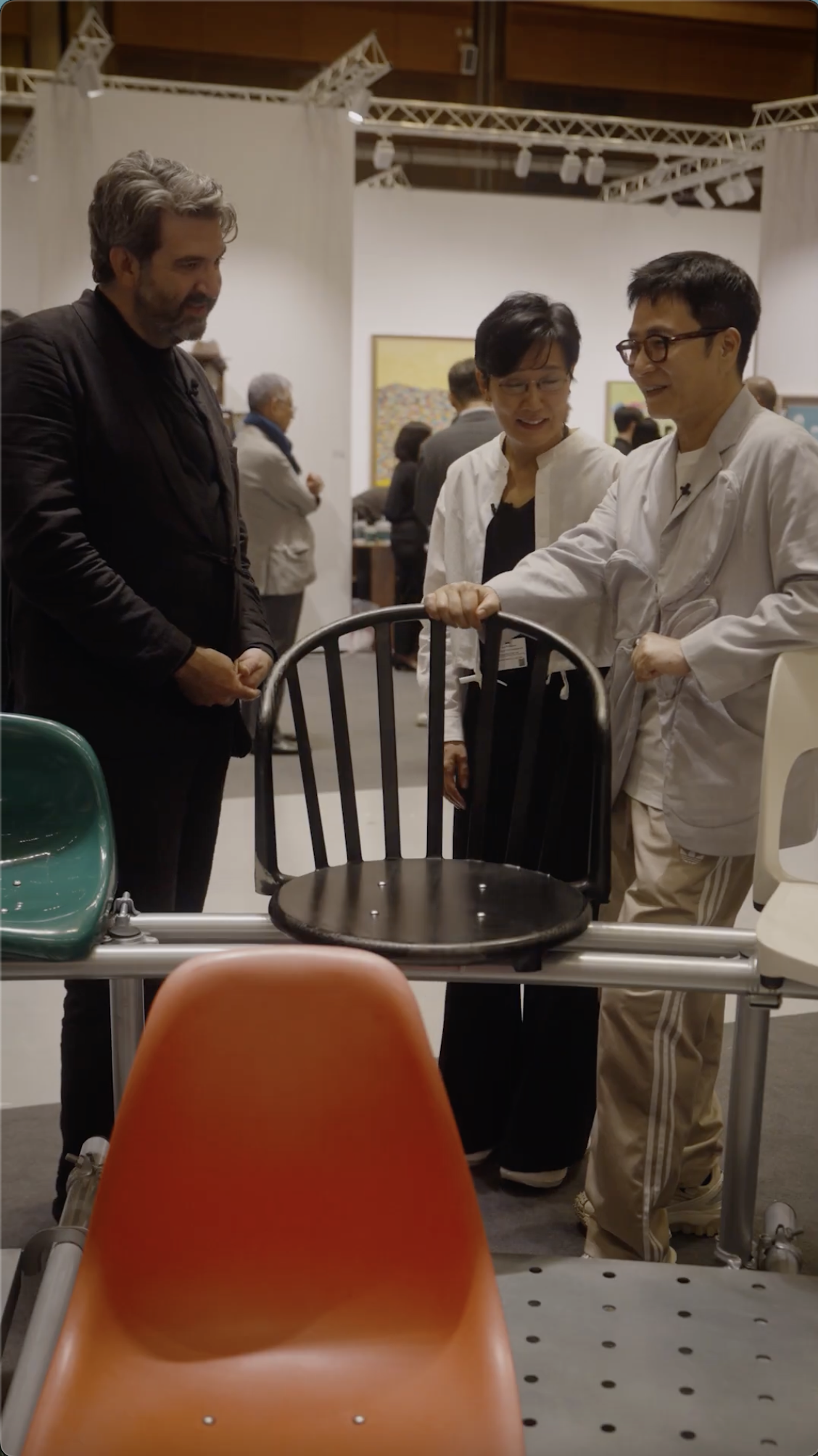
Moon Kyungwon and Jeon Joonho interviewed by Matthew McLean at FRIEZE Seoul 2026
Instead of trying to fit both people into a single wide composition, the interviewer can have their own angle and the interviewee their own. This allows each face to occupy more of the frame and remain clearly visible when viewed on a mobile screen.
It also gives us greater flexibility in the edit. Each angle can be composed specifically for the vertical format rather than trying to make a horizontal two-shot work inside a narrow frame.
A two-shot can still be useful as an establishing or transitional image, but it does not necessarily need to be the primary way we cover the conversation.
Camera Movement
The format also affects camera movement.
Horizontal pans can work naturally in a 16:9 frame because there is substantial space for a subject to move from one side of the image to the other. In a narrow vertical frame, the same movement can feel restrictive or cause the subject to leave the frame very quickly.
For this reason, we are often more selective with horizontal camera movements when shooting vertically.
Depending on the scene, movements such as tilts, pushes, pulls, or movement toward and away from the subject can work more naturally with the vertical composition.
This does not mean that horizontal pans should be avoided entirely. Rather, they need to be designed around the narrower frame and the amount of horizontal space available to the subject.
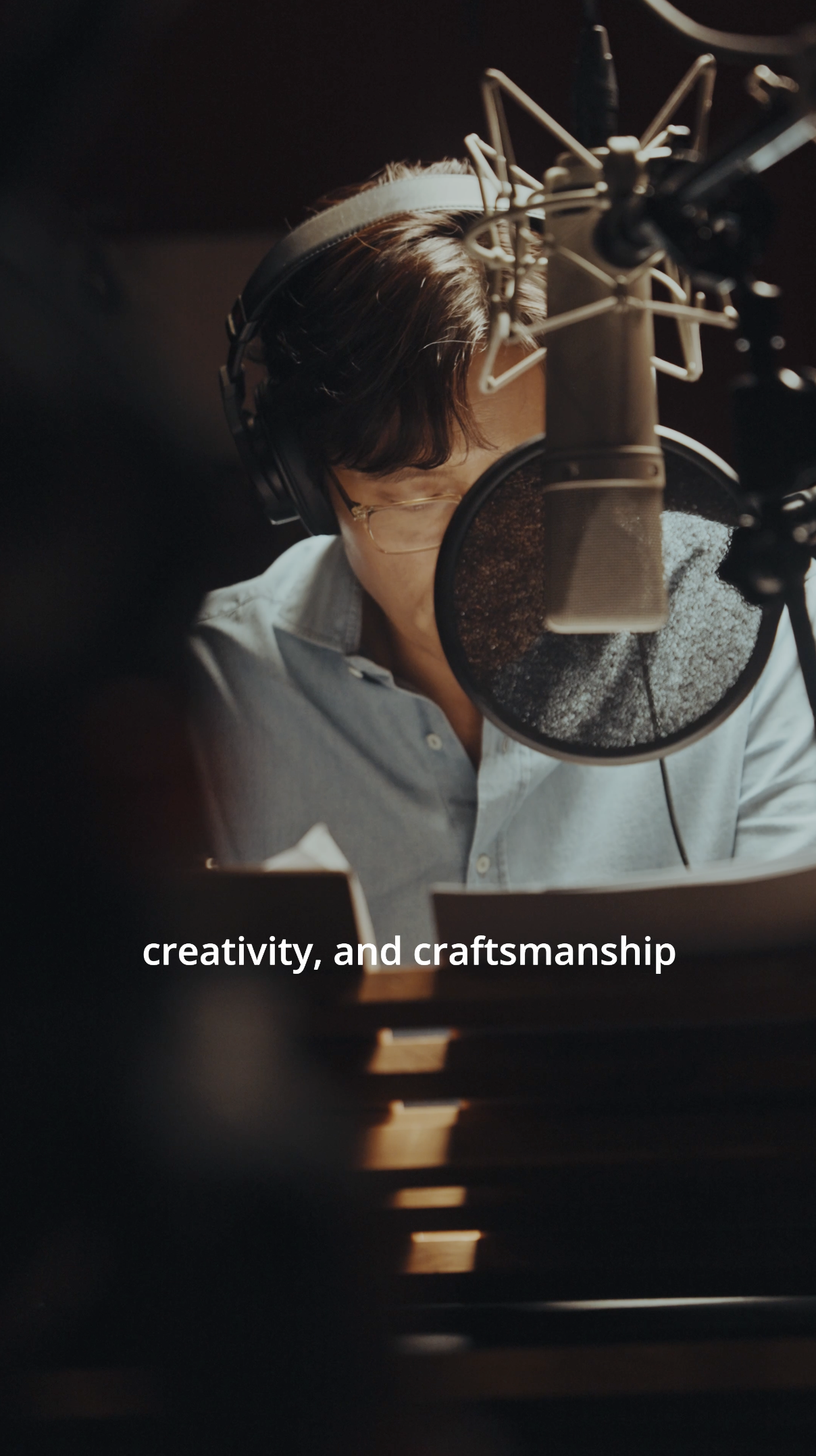
Lee Byunghun recording the audio guide for the British Museum’s Korea exhibition
Using Vertical Elements
The environment itself can help reinforce a vertical composition.
During location scouting and camera setup, we look for elements that naturally occupy the height of the frame, including tall buildings, columns and doorways, trees and vegetation, staircases, vertical machinery, architectural details, people standing or walking, and objects extending upward through the frame.
These elements give the image a natural visual structure.
For example, rather than treating a tall building as part of a wide cityscape, a vertical composition can emphasize its height by allowing the building to extend through much of the frame.
The same principle applies to signage and graphics. Large horizontal signs may become difficult to read or visually insignificant once placed within a narrow composition. When possible, we look for vertical structures and visual details that make better use of the available frame.
Designing for Small Screens
One of the most important considerations with vertical video is where it will be viewed.
Much of the demand for 9:16 content comes from mobile platforms, where the viewer is likely to encounter the video on a relatively small screen.
This changes how much visual information a shot can effectively communicate.
A wide shot containing several small subjects may look excellent on a large monitor but become difficult to understand when reduced to the size of a phone screen.
For this reason, vertical productions often benefit from stronger, more immediately readable visual information, such as close-ups, medium shots, faces, hands, objects, textures, details of a process, and clear subject-background separation.
This does not mean every vertical shot needs to be a close-up. Establishing shots are still important. The consideration is whether the main visual information remains legible at the size at which the audience will actually see it.
For documentary and branded work in particular, this can affect how we cover an activity. Instead of relying on one wide shot to explain what is happening, we may build the sequence from several closer images that each communicate a specific part of the action.
Thinking About the Platform and Consumption Habits
The platform not only dictates how we compose the shots, but how the content is consumed. Social media platforms are built around scrolling, which requires content to be quick and visually engaging from the very beginning. There is very little room for long, slow shots, making fast-paced editing and short-form pacing essential to maintaining viewer retention.
Vertical video is also displayed within a platform interface. On TikTok, Instagram Reels, YouTube Shorts, and similar platforms, interface elements can occupy portions of the screen. Captions, buttons, profile information, descriptions, and other controls can overlap the image.
This means that important visual information should not automatically be placed right against the edges of the frame. The same consideration applies to text and graphics added during post-production. Titles, subtitles, logos, and other important information need sufficient safe margins so that they remain visible when the video is displayed within the platform interface.
Integrating Korean and English Subtitles
Many of the projects we produce feature Korean dialogue paired with English subtitles. Incorporating these subtitles within the vertical screen requires careful placement to respect interface overlays and safe zones. We ensure subtitle text is kept big enough to be easily readable on mobile screens, while maintaining natural line breaks and precise cut-off points between each subtitle block to match the rhythm of the speech.
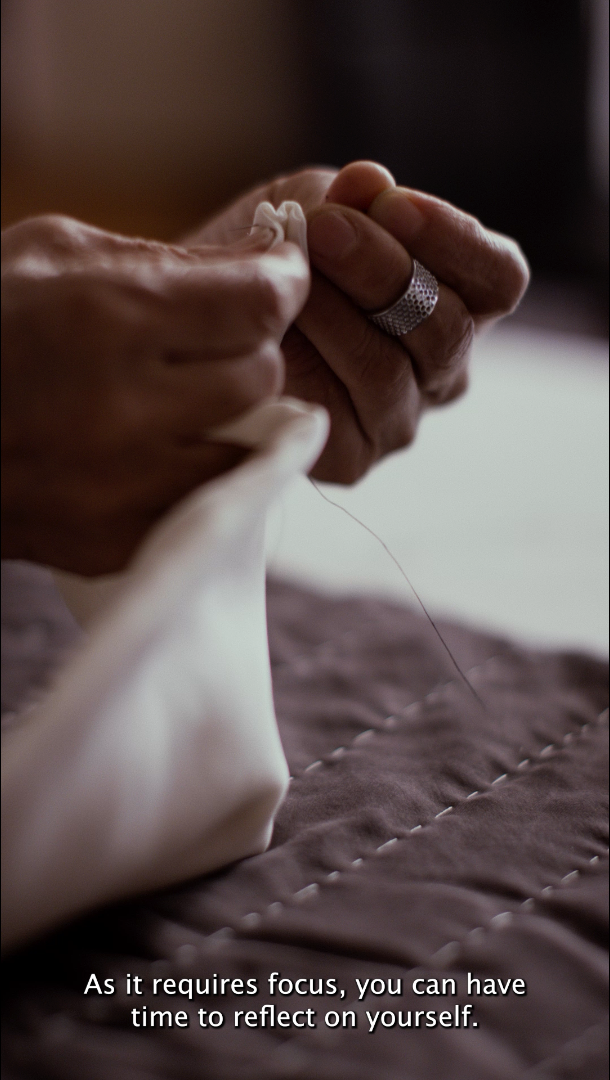
Streetwear brand IISE’s collaboration with Nubi master Kim Hae Ja
Audio Considerations for Vertical Production
Shooting vertical also introduces specific technical adjustments for sound and rigging. On wide shots, there is significantly more vertical space above a subject within the frame. This means boom mics or overhead rigging must be kept higher and more carefully managed than when shooting 16:9 to stay out of the shot.
Additionally, when working in noisy environments such as busy events or outdoor streets, relying solely on an overhead boom can introduce too much ambient noise due to the distance required by the frame. In these scenarios, utilizing lapel mics is extremely helpful to make up for the distance and maintain pristine vocal clarity.
We therefore consider these visual, platform, and audio areas during both shooting and editing rather than adding them as an afterthought.
Vertical-First vs. Cropping 16:9
There is still a place for shooting 16:9 and creating vertical versions afterward.
If a project needs both a traditional 16:9 master and several social media cuts, shooting with both formats in mind can be an efficient solution. However, cropping a 16:9 image to 9:16 removes a substantial amount of the original horizontal frame. A 16:9 image contains much more horizontal information than a 9:16 frame can retain. (Velocaption)
This can create problems when two people need to remain visible, the subject is positioned toward one side of the frame, important environmental information sits outside the centre, a subject moves horizontally, text or signage occupies a wide area, or the composition depends on the relationship between multiple subjects.
When we know a vertical deliverable is important, we can make different decisions on set rather than relying entirely on reframing in post.
How Moktan Approaches Vertical Filmmaking
At Moktan, we increasingly approach vertical video as a shooting format rather than simply an export format.
That means considering the 9:16 frame during pre-production, location scouting, camera setup, shooting, and editing.
During production, this can mean choosing closer compositions, separating interview angles, being more selective with horizontal camera movements, looking for vertical elements within locations, balancing the frame using foreground, middleground, and background, and making sure important visual information remains readable on a small screen.
It also means thinking about the final platform, consumption pacing, and audio capture strategy. A vertical film intended for a fast-scrolling Instagram Reel may have different requirements from a vertical film designed for a large exhibition screen. The aspect ratio may be the same, but the viewing environment and audience expectations are not.
As vertical video becomes a larger part of our work, the goal is not simply to make existing filmmaking techniques fit inside a 9:16 rectangle. The goal is to use the vertical format as part of the visual language of the film from the very beginning.
