
Behind the Voice: Producing the British Museum Audio Guide in Korea
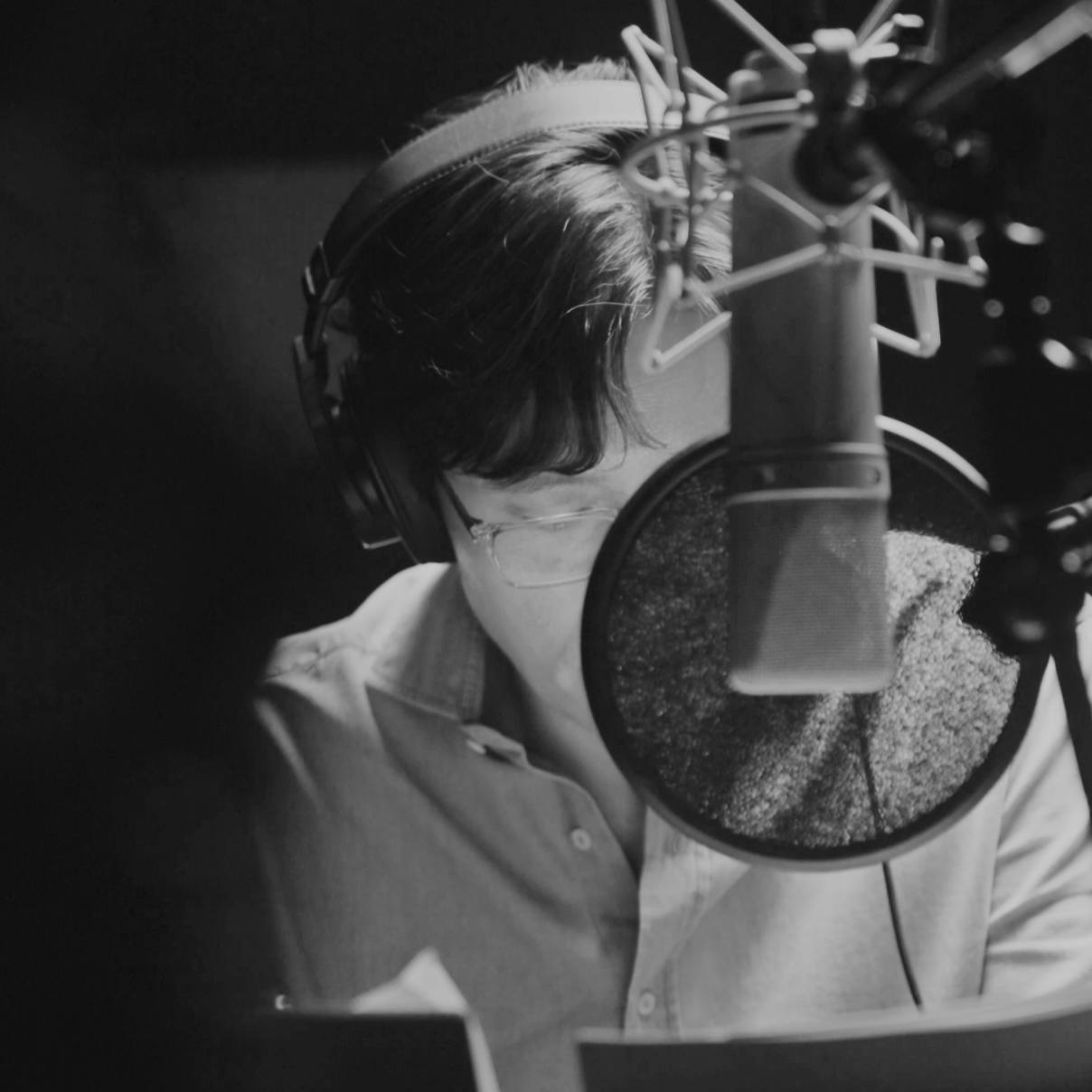
Behind the Voice: Producing the British Museum Audio Guide in Korea
10/6/26
As part of the British Museum’s Korea: 2,000 Years of Creativity exhibition, Moktan Productions was responsible for recording part of the exhibition’s official audio guide, now available through the British Museum Audio App.
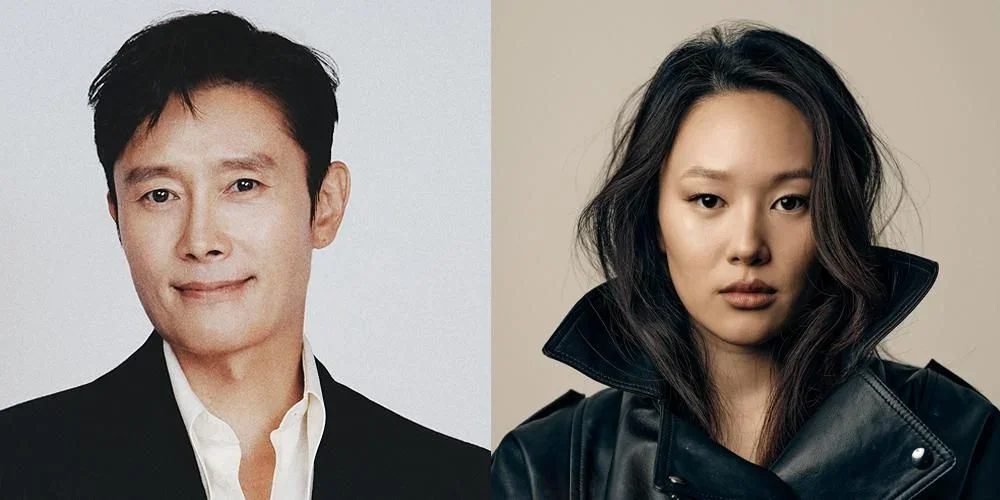
The project brought together two prominent Korean actors, Lee Byung-hun and Yerin Ha, whose voices guide visitors through selected parts of the exhibition. For Moktan, the project involved more than simply recording audio. We were involved from pre-production through production, post-production, and delivery, while also producing social media content documenting the recording process.
Producing for the British Museum
The audio guide production ran in parallel with Moktan’s production of the exhibition’s audiovisual installation.
While the exhibition video involved filming traditional Korean artists and craftspeople across multiple locations in Korea, the audio guide required a very different production environment. The priority was clean, controlled voice recording while also creating an efficient setup that could accommodate the additional filming requirements.
Moktan recorded Lee Byung-hun in Seoul, while Yerin Ha also contributed her voice to the audio guide.
The project required coordination between the British Museum team, talent management, the recording studio, audio professionals, and Moktan’s production team.
Finding the Right Recording Studio
Studio selection was one of the first challenges during pre-production.
The studio needed to meet the British Museum’s technical requirements while also providing an appropriate environment for Lee Byung-hun’s team. Location, studio facilities, recording quality, atmosphere, and the ability to accommodate both audio recording and filming were all considered.
We initially researched and proposed a selection of suitable recording studios to the British Museum team for approval.
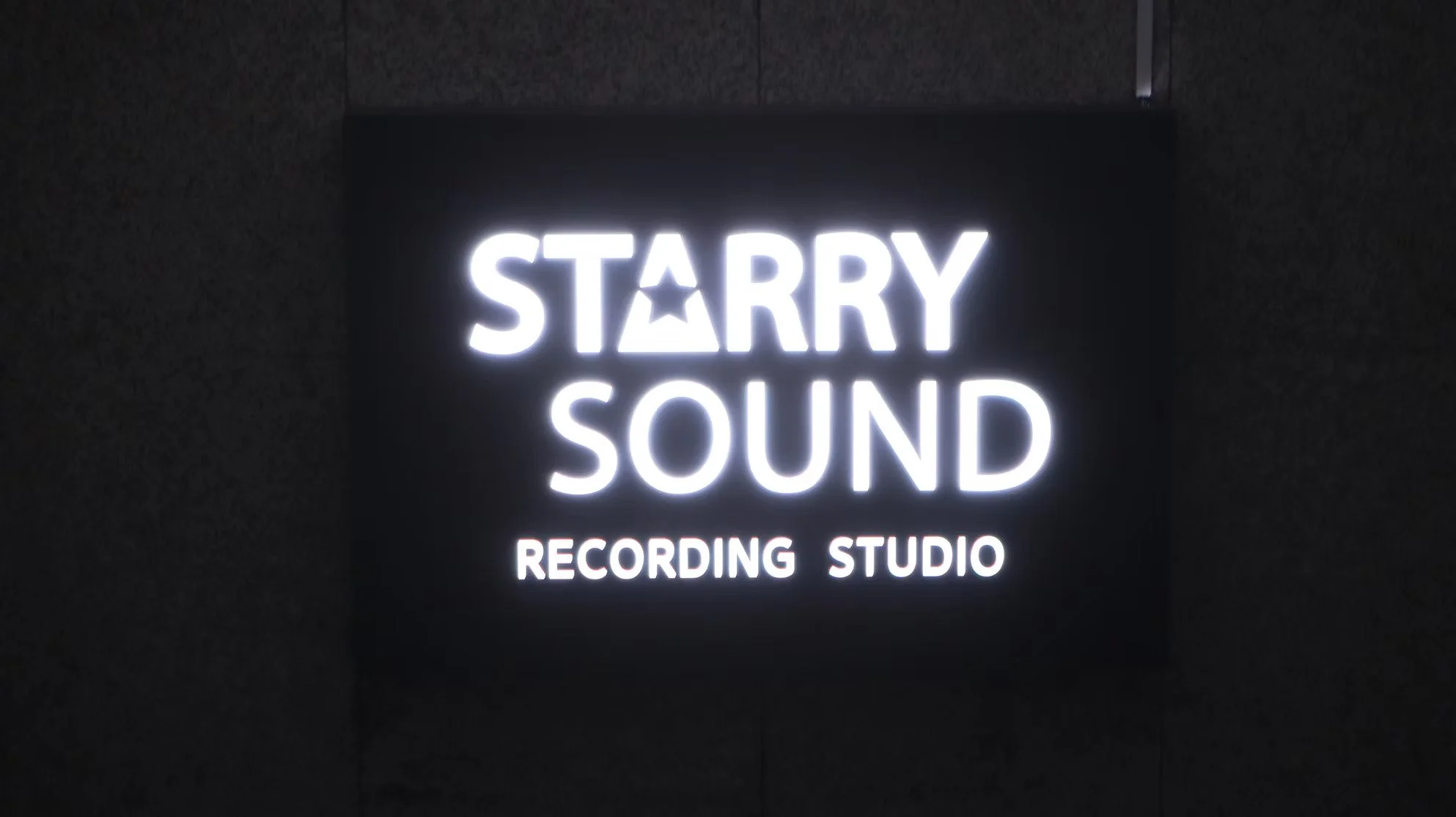
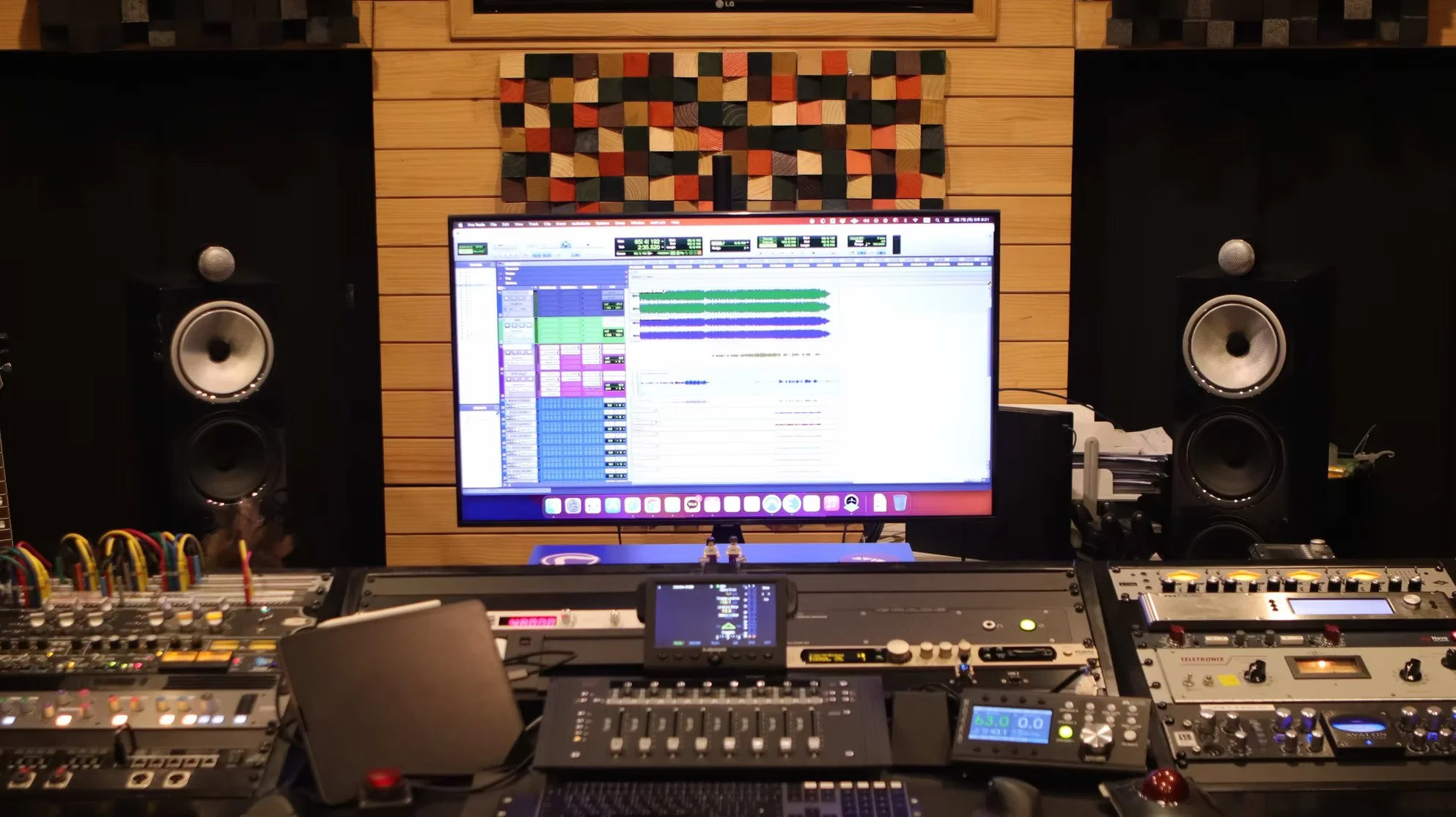
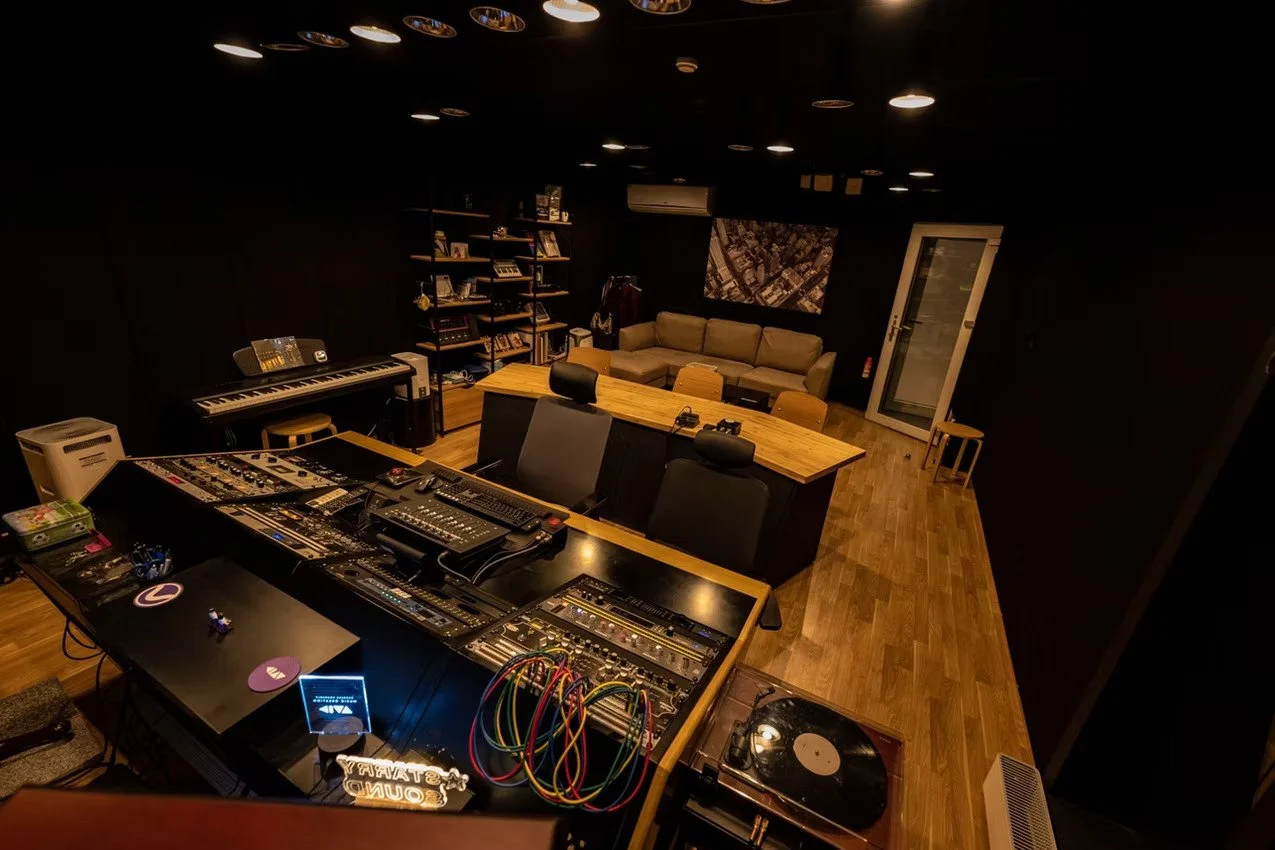
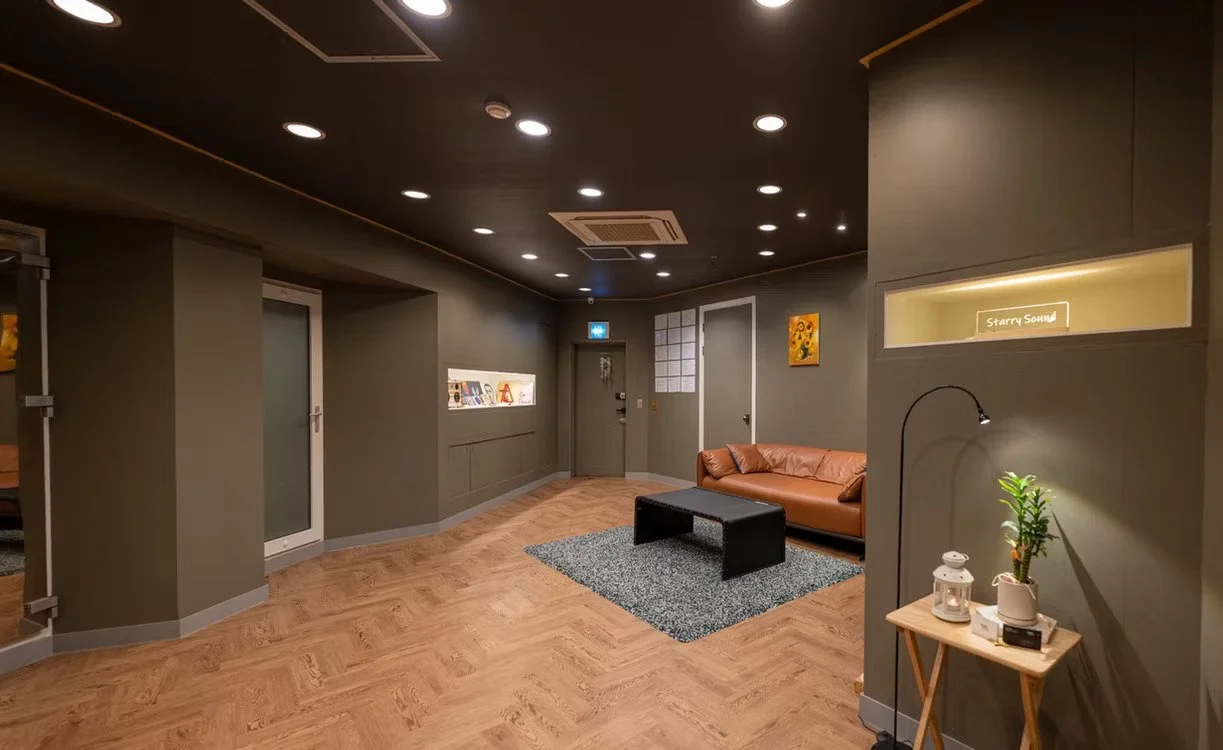
The final choice was Starry Sound Recording Studio in Gangnam. Its convenient location and warm, intimate atmosphere made it a suitable environment for both the recording session and the additional filming planned around it.
Recce and Technical Testing
Before the recording day, Moktan conducted a recce and technical test at the studio.
The recording setup was tested to make sure the technical workflow could accommodate the session. This included testing the recording system, remote monitoring, and live communication between the recording booth and control room.
This was particularly important because the British Museum team needed to be able to monitor the session and provide feedback remotely.
Testing the workflow in advance also allowed us to identify potential issues before the talent arrived, helping keep the production day as efficient as possible.
Building a Setup for Both Audio and Video
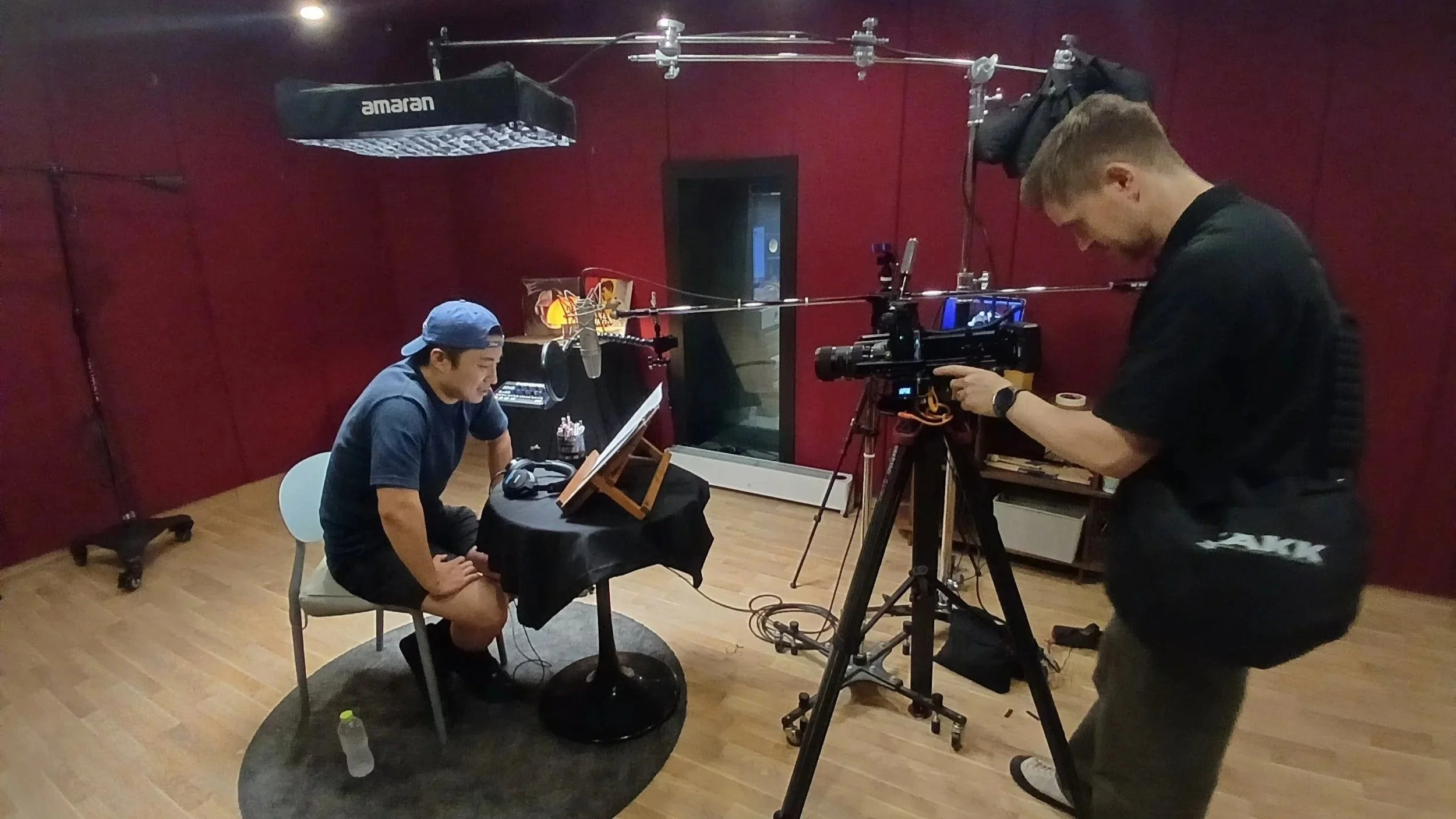
Although the primary purpose of the session was to record the audio guide, we were also producing social media films around the recording process.
This meant the recording environment needed to work visually as well as acoustically.
The crew arrived early on the production day to prepare the studio before the talent team arrived. We established the recording booth and arranged the equipment for both audio recording and filming.
In the studio lounge, we made a simple rearrangement of the existing furniture to create a clean and visually appropriate angle for the interview with Lee Byung-hun.
The objective was not to transform the studio into a large film set, but to make efficient use of the existing environment while keeping the focus on the recording session.
A Tight Production Schedule
The schedule on the recording day was tight, with limited flexibility once the talent team arrived.
The crew completed the technical setup early in the morning so that recording could begin as soon as the talent arrived.
Lee Byung-hun was joined by actor Sean Richard Dulake, who worked as a dialect coach during the session.
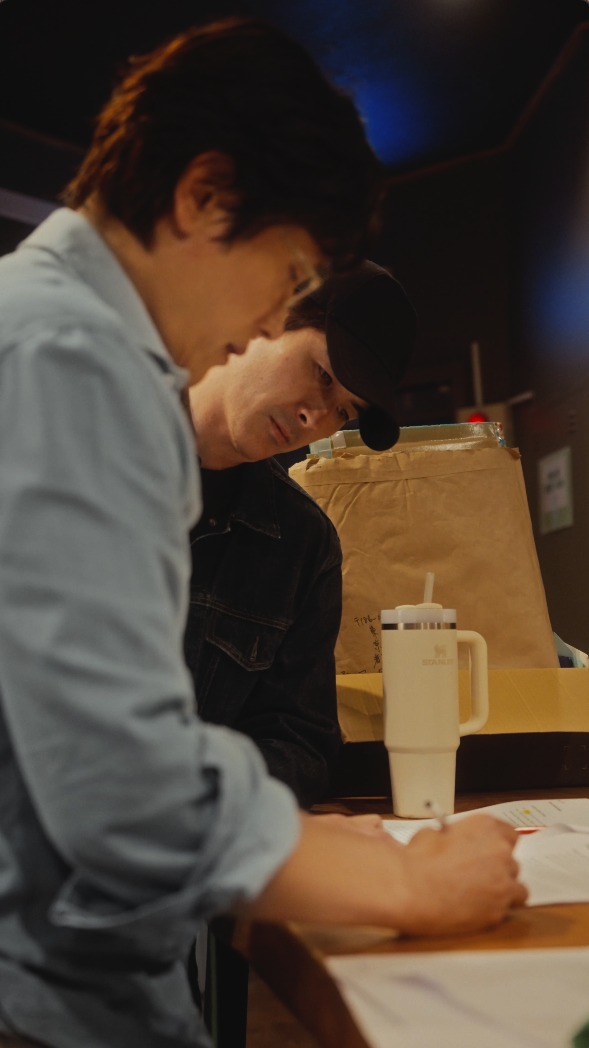
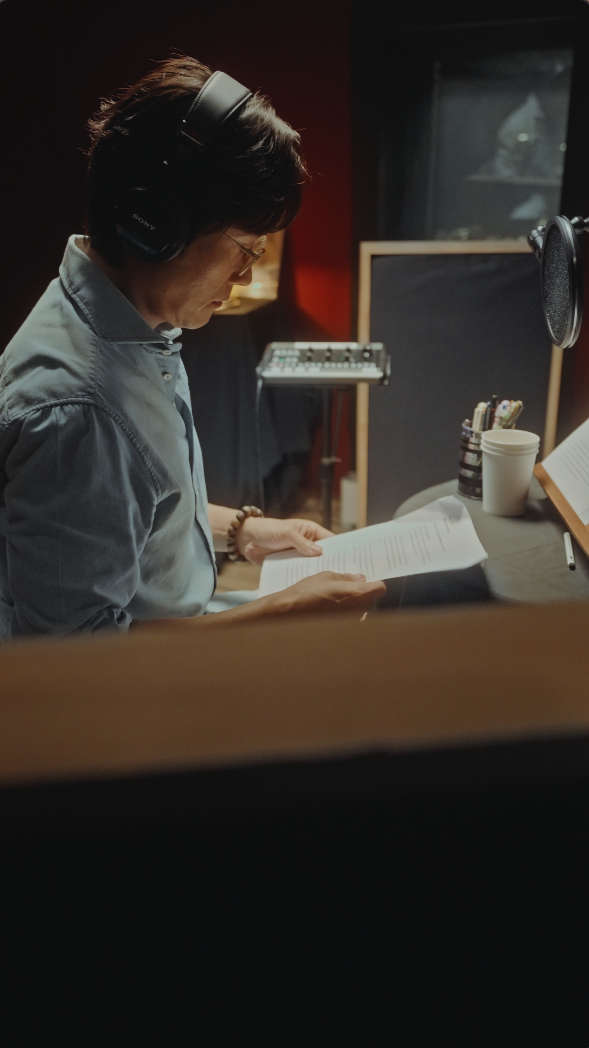
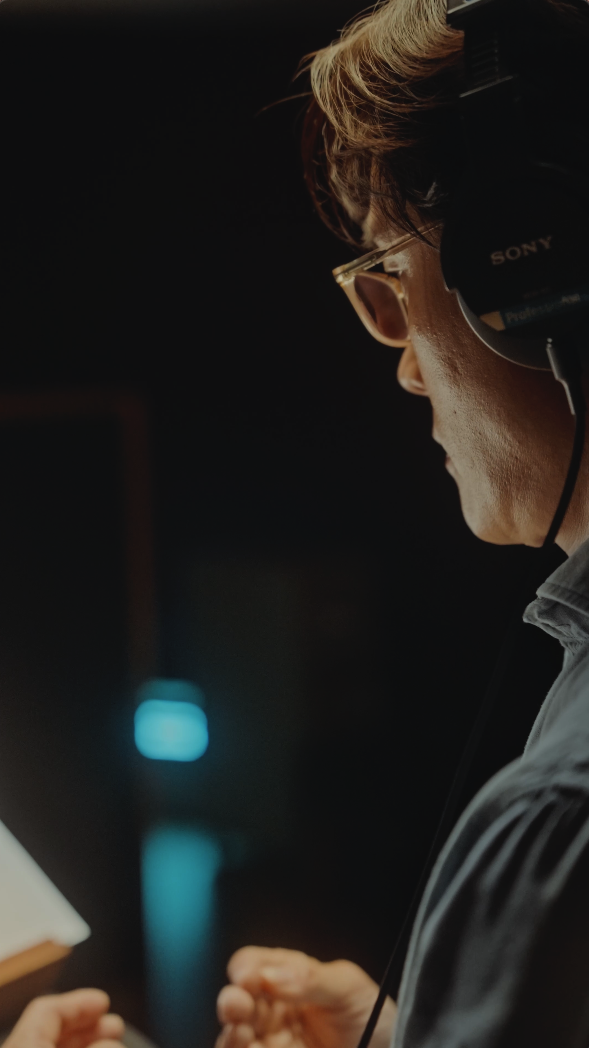
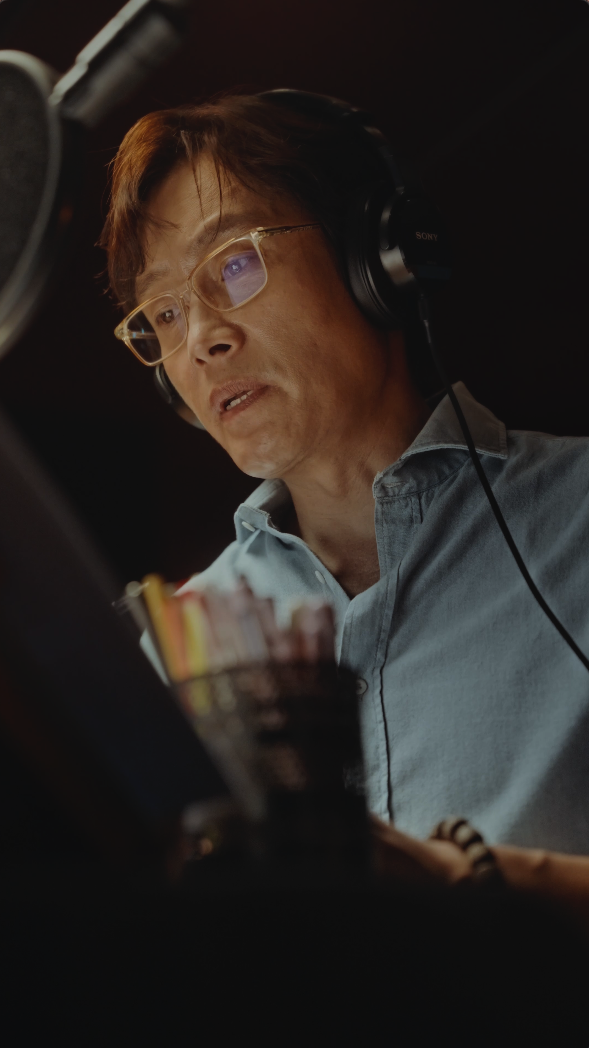
During the recording, Director and DoP Mike Beech and AC Jeechul Ahn remained in the booth, filming Lee Byung-hun while he recorded his narration.
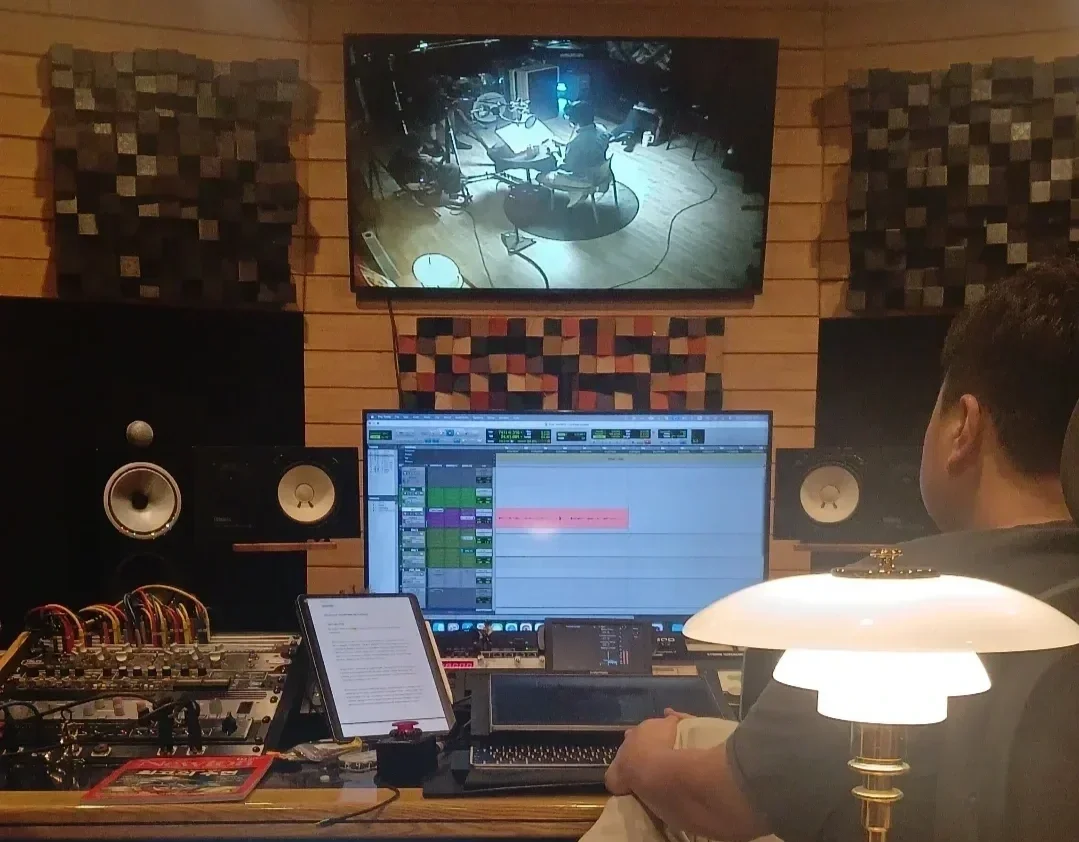
Producer Hyunsuh Paik stayed in the control room alongside audio engineer and studio head Nam Seungwon. From there, we monitored the recording, communicated with the booth, and coordinated with the British Museum team.
This division allowed the audio and visual sides of the production to operate simultaneously without adding unnecessary equipment or personnel to the recording environment.
Recording and Filming at the Same Time
The recording session itself had two purposes.
First, we needed to capture the audio guide at the required technical standard.
Second, we needed to document the recording process for the social media films.
This required the camera team to work quietly and unobtrusively inside the recording booth while maintaining the conditions required for a professional voice recording.
The visual coverage focused on Lee Byung-hun recording the guide, the studio environment, and details of the recording process. Rather than interrupting the session for extensive filming setups, we designed the camera approach around the existing recording workflow.
From Audio Recording to Interview
Once the audio guide recording was completed, the team moved quickly into the interview.
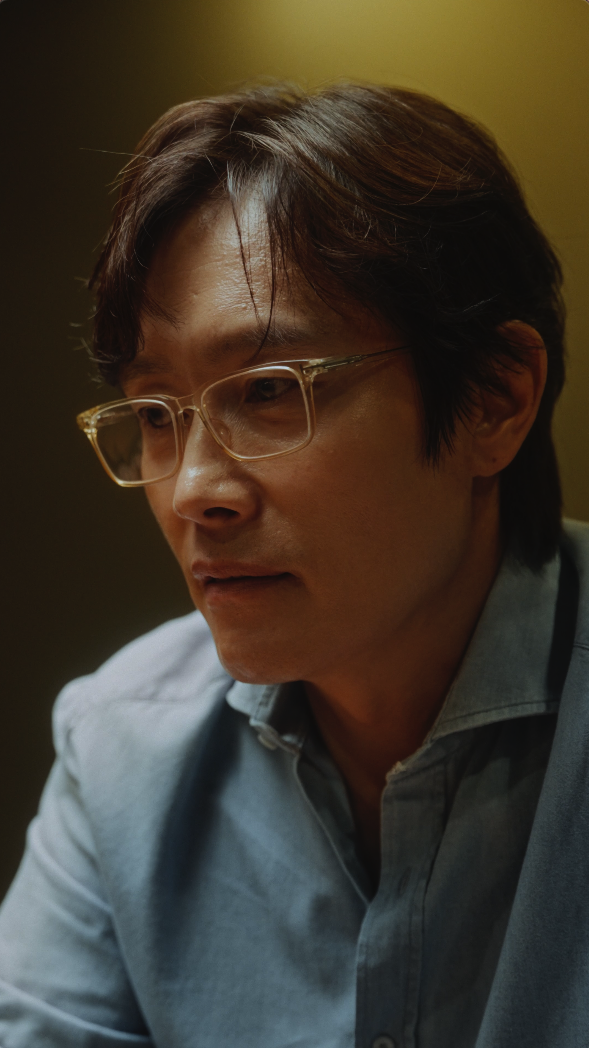
Because the schedule was tight, there was little time for a full reset. The studio lounge had already been prepared with the interview composition in mind, allowing us to transition from the recording session to the interview efficiently.
The interview with Lee Byung-hun became an additional component of the social media content, providing an opportunity to capture his perspective alongside behind-the-scenes footage of the audio guide recording.
This meant the same production day generated both the required audio material for the exhibition and additional video content for the British Museum’s digital channels.

From Production to Post-Production
After the recording session, the audio files were transferred to the client for the next stage of the audio guide production.
Moktan then moved into post-production on the social media films. The behind-the-scenes footage and interview were shaped into short-form content designed to give audiences a glimpse into the making of the British Museum audio guide and introduce the people behind the voices.
The teaser film was released as part of the British Museum’s promotional campaign and reached 1 million views within just a few days, giving the project significant visibility ahead of the exhibition opening.

Because the social content was planned as part of the original production rather than as an afterthought, we were able to capture the necessary material without significantly extending the recording schedule.
End-to-End Production Support
The project was another example of Moktan’s approach to production in Korea, where a project can require several different production disciplines to operate together.
For the British Museum audio guide, Moktan was involved from the initial studio search and technical planning through the recording session, remote monitoring, talent coordination, filming, audio delivery, and post-production of the social media films.
The production ran alongside our larger British Museum exhibition project, requiring careful scheduling and coordination across multiple teams and deliverables.
From a voice recording session in a Seoul studio to the final digital content, Moktan managed the production process from pre-production through delivery, supporting the British Museum’s exhibition with both the audio guide and the visual story behind its creation.
