
Connecting Past and Present: Producing a Three-Screen Installation for the British Museum’s Korea Exhibition
Connecting Past and Present: Producing a Three-Screen Installation for the British Museum’s Korea Exhibition
9/14/26
In July 2026, Moktan Productions was commissioned by the British Museum to create a film for an audiovisual installation at the entrance of its upcoming Korea exhibition.
The installation was conceived as a visual introduction to the exhibition, connecting historical Korean art with the living traditions and contemporary culture of Korea today. Opening on October 1st, 2026, the exhibition provides an opportunity to present Korean creativity to an international audience at one of the world’s most prestigious museums.
The commission came with a particularly ambitious format. The final installation would play across three separate vertical screens, with the entire piece lasting approximately 90 seconds.
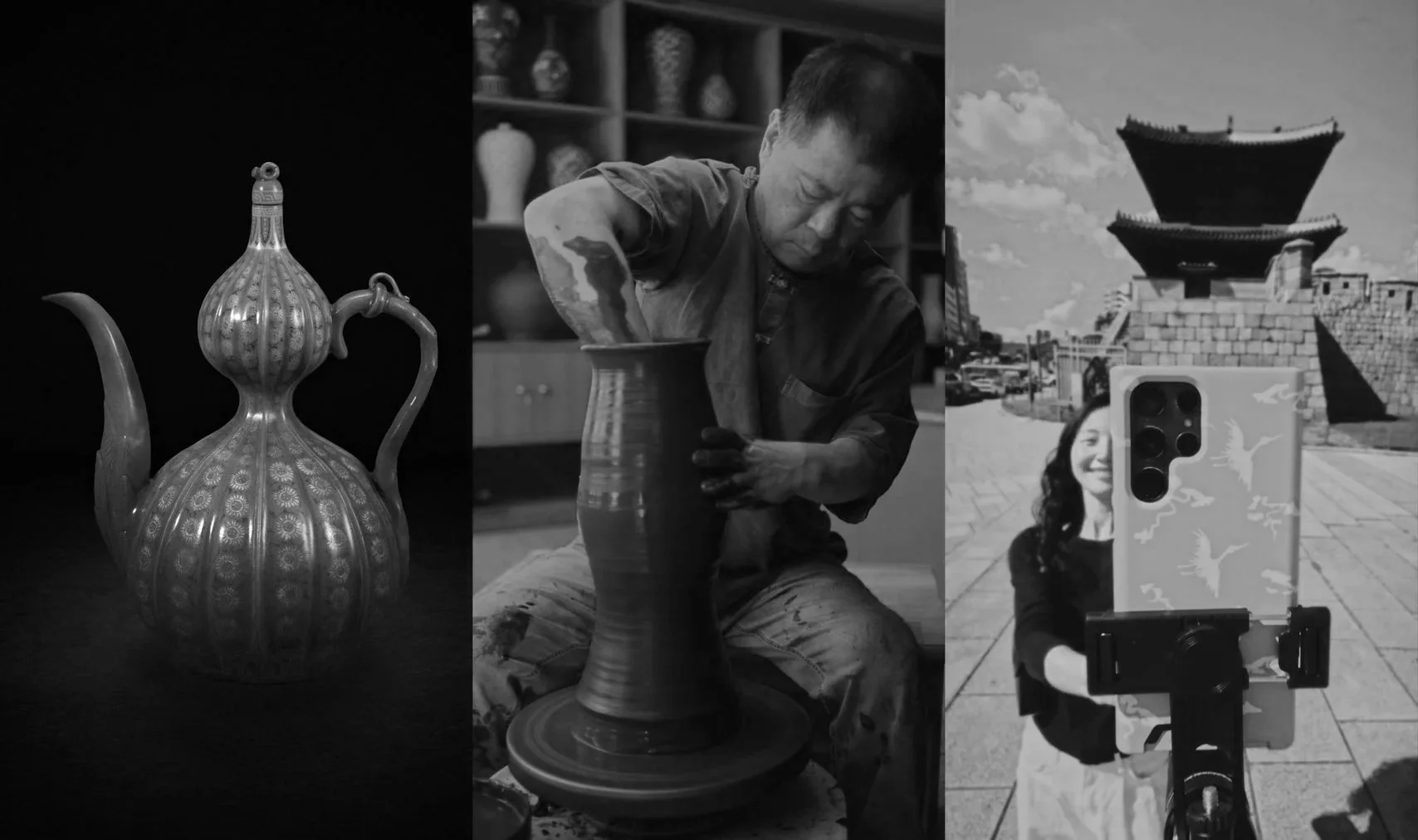
Across six sections, the installation explores different aspects of Korean artistic tradition, including metalworking, Goryeo celadon, moon jar porcelain, sutra calligraphy, woodblock printing, and their contemporary connections.
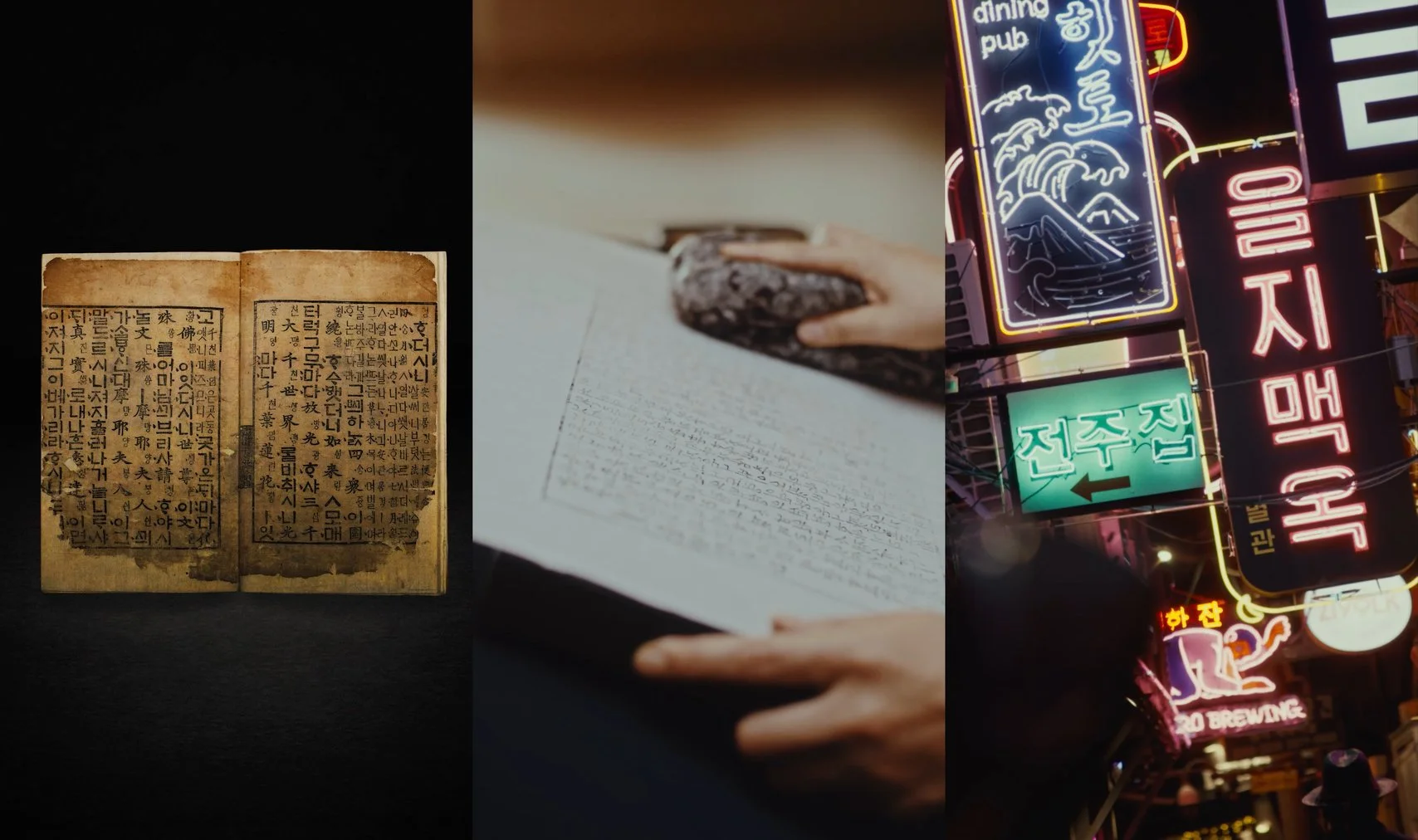
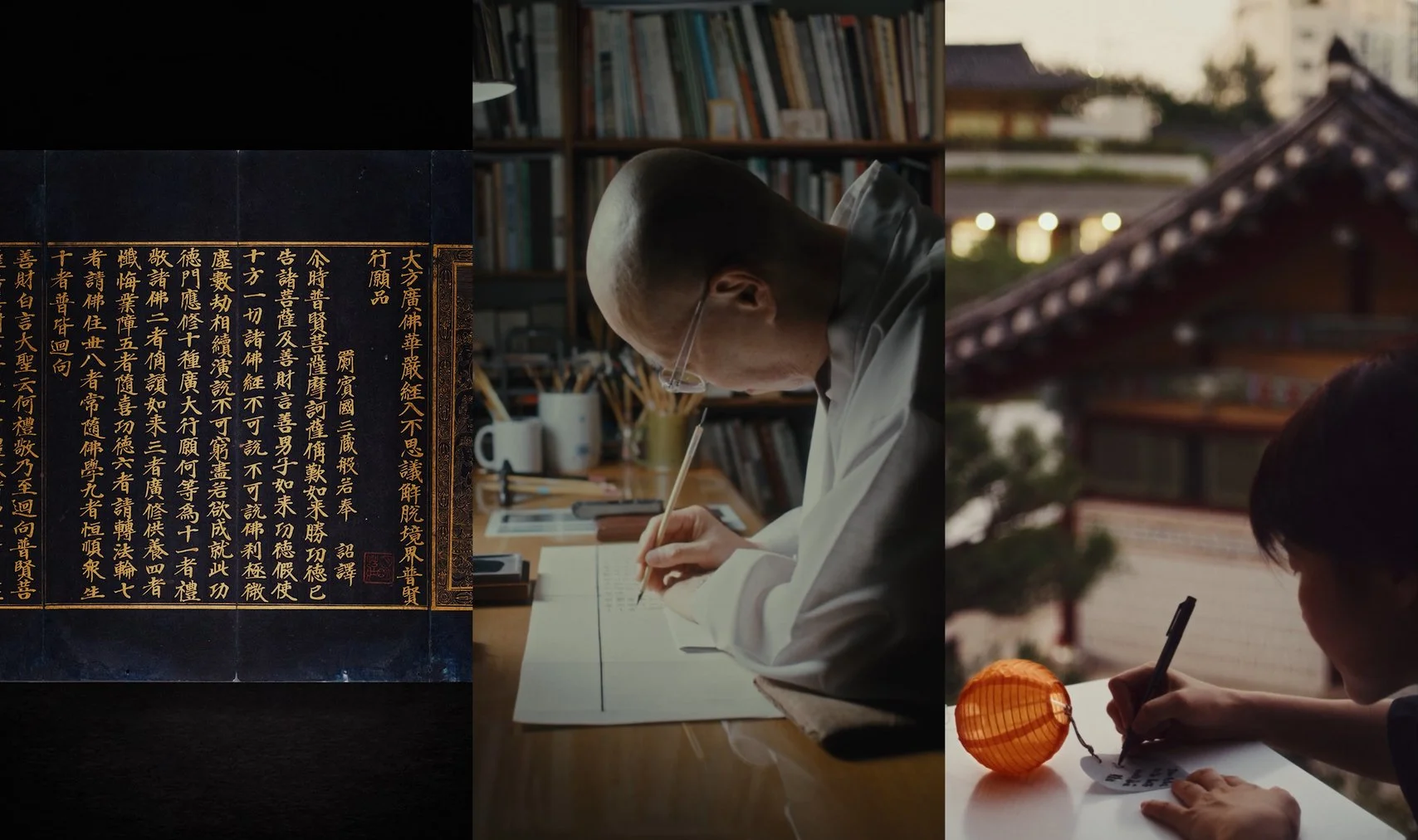
Each section follows the same visual structure. The left screen presents the historical object displayed in the exhibition. The centre screen reveals the corresponding artistic process, filmed with contemporary masters and practitioners. The right screen explores how the tradition continues to influence contemporary Korean life.
Together, the three screens were designed to create a conversation between the past, the process, and the present.
A Compressed Production Schedule
The project began with a tight production schedule.
Before the full exhibition installation was complete, the British Museum team needed material that could be used to test video playback during the exhibition development process. This meant Moktan needed to begin securing artists and locations almost immediately.
The production required research across multiple traditional art forms, identifying active practitioners, contacting institutions, securing access, and preparing shoots across different regions of Korea, often simultaneously.
Because the project aligned closely with Moktan’s own interest in sharing Korean culture and creativity with international audiences, we also committed to supporting the production at a reduced rate.
It was an opportunity to contribute to a project that would introduce Korean cultural heritage to visitors from around the world.
The first challenge was simple to describe but difficult to solve.
We needed to find the right people.
Goryeo Celadon: From Seoul to Gangjin
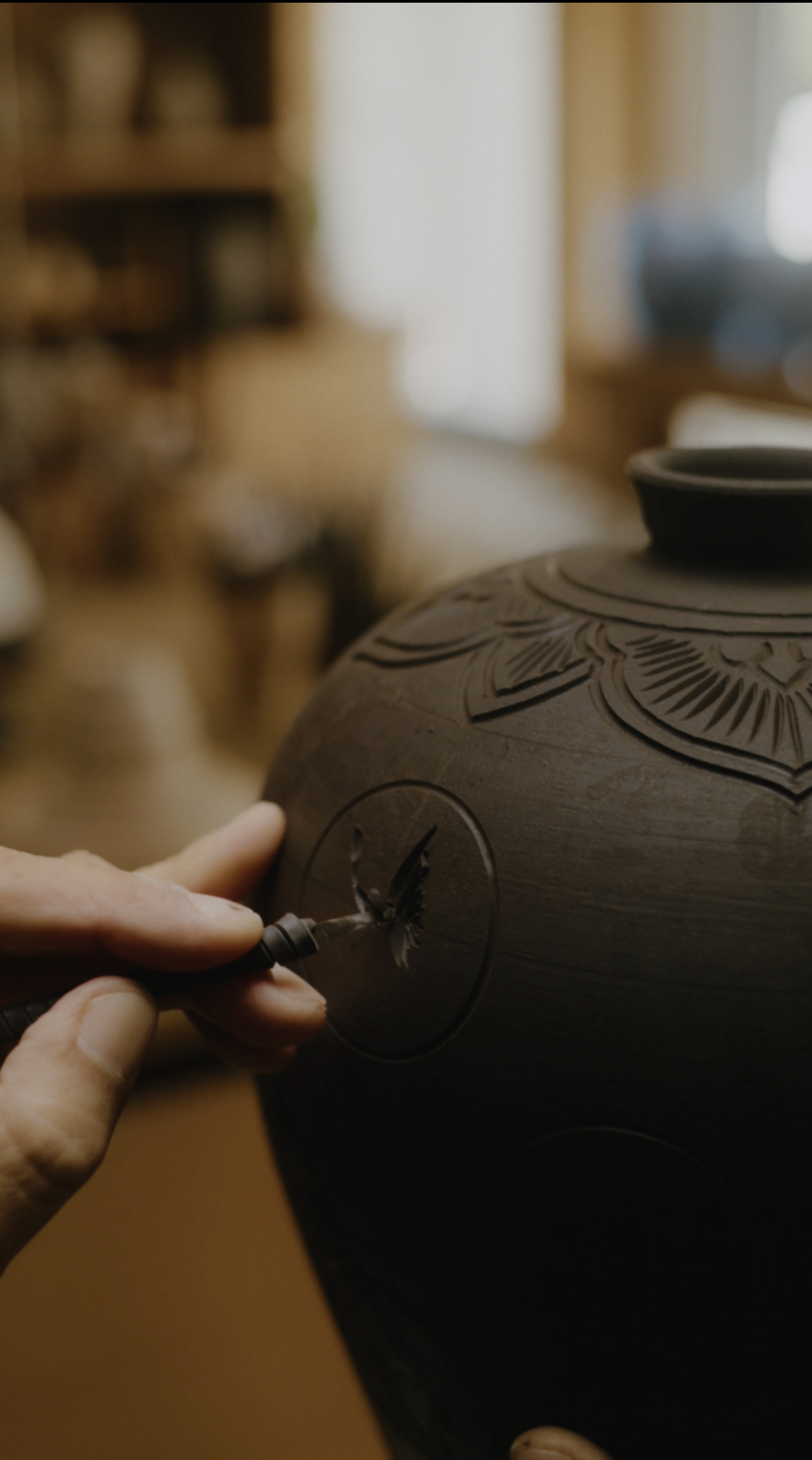
One of the first locations Moktan secured was the Goryeo Celadon Museum in Gangjin.
Gangjin is one of the most significant places associated with Goryeo celadon in Korea and remains a major centre for the study and preservation of the art form. The museum’s research team continues to produce celadon pottery, preserving traditional techniques while keeping the craft active.
After going through the appropriate institutional channels, our team was able to privately coordinate with the head of the research team to arrange filming.
The challenge was distance. Gangjin is located at the southern end of the Korean peninsula, approximately 400 kilometres from Seoul.
The journey was significant, but the location provided exactly what the project needed: active practitioners working directly with traditional techniques.
We filmed two masters demonstrating different stages of the celadon-making process. One focused on shaping the clay into its final form, while another demonstrated the detailed carving of patterns into the surface.
These processes needed to be captured in a way that could communicate the complexity of the craft within only a few seconds of the final installation.
With three screens running simultaneously and only 90 seconds for the entire piece, every shot would need to justify its place.
Finding a Sutra Calligraphy Master
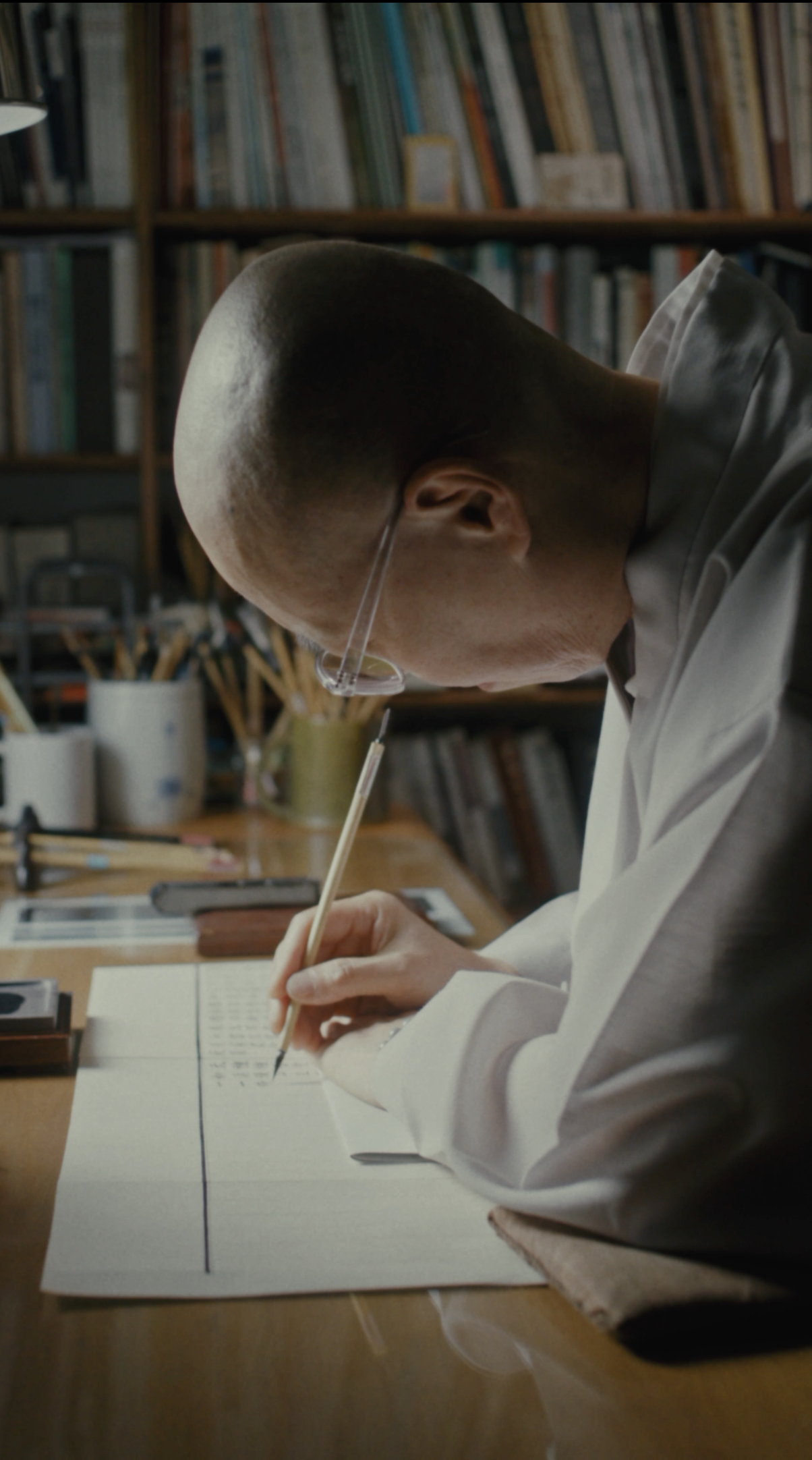
The next challenge was sutra calligraphy.
Unlike some traditional art forms with obvious museums or commercial institutions, the community of practitioners working specifically with traditional Buddhist sutra transcription is small and difficult to access.
Finding the right artist required a different approach.
Our producer joined online communities and began searching for people who might have connections to active sutra artists. Through one of these communities, we were eventually connected to the Venerable Haeng-o, a Buddhist nun and calligraphy master.
The Venerable Haeng-o was one of the leading students of Kim Kyun-ho, one of Korea’s foremost masters of sutra calligraphy and a designated Intangible Cultural Heritage practitioner. She is herself an accomplished master, teaching classes at some of Seoul’s major Buddhist temples.
We visited her temple in Seoul to film the process.
Her principal practice involves gold calligraphy, and the historical sutra displayed in the exhibition was also created using gold on blue paper. However, the British Museum team requested that we film a different technique to avoid suggesting that the process being filmed was the exact process used to create the historical object in the exhibition.
For this reason, the production focused on black ink on paper.
The Venerable Haeng-o told us that she had not used this particular technique in 17 years. She even apologised before filming, saying that she felt her calligraphy might not be at its best after such a long period away from the method.
The result was extraordinary.
The scene became one of the clearest examples of the project’s central idea: a living master using a traditional technique that continues to carry thousands of years of cultural knowledge.
Searching for Traditional Woodblock Printing
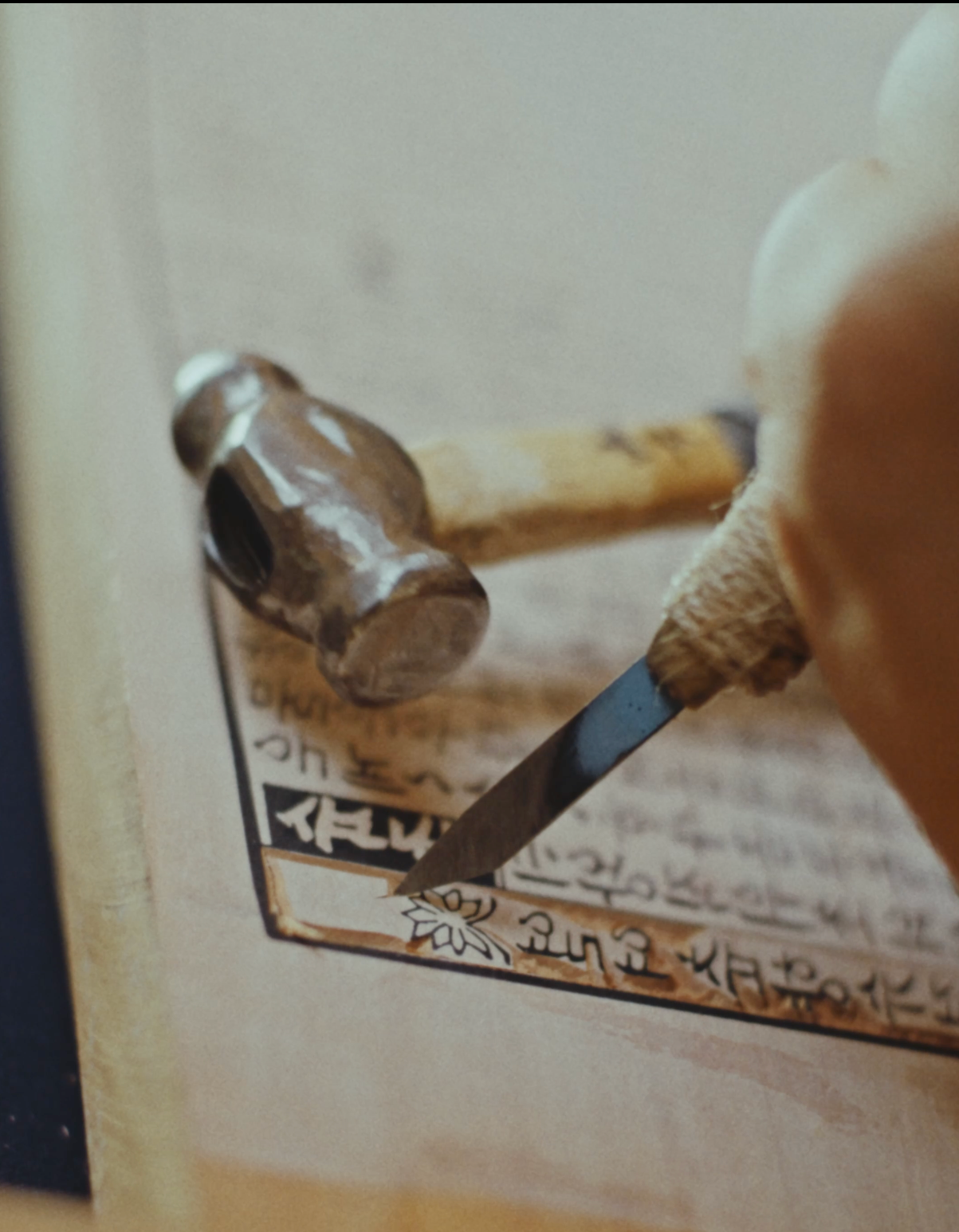
A few days later, the team travelled to Jeonju to film the woodblock printing process.
This proved to be one of the most difficult art forms to research.
There were museums and institutions connected to printmaking, but many only displayed historical works. Contemporary printmakers often used traditional metal printing processes or modern techniques, while other artists working with woodblock printing were producing work in contemporary styles.
The production required someone capable of carving traditional Hangul woodblocks.
Eventually, our research led us to the Wanpanbon Culture Center in Jeonju Hanok Village. The institution is dedicated to preserving and reinterpreting Jeonju’s publishing heritage, reflecting the city’s historical role as an important centre of publishing and record culture.
We learned that the centre held traditional woodblock printing classes once a week.
The instructor was able to demonstrate the process of carving the blocks, providing the production with an opportunity to document the detailed physical process required for the installation.
As with the other sections, the challenge was not simply to film the craft.
It was to identify the specific moments that could communicate the process most clearly within a matter of seconds.
Inside a Moon Jar Workshop
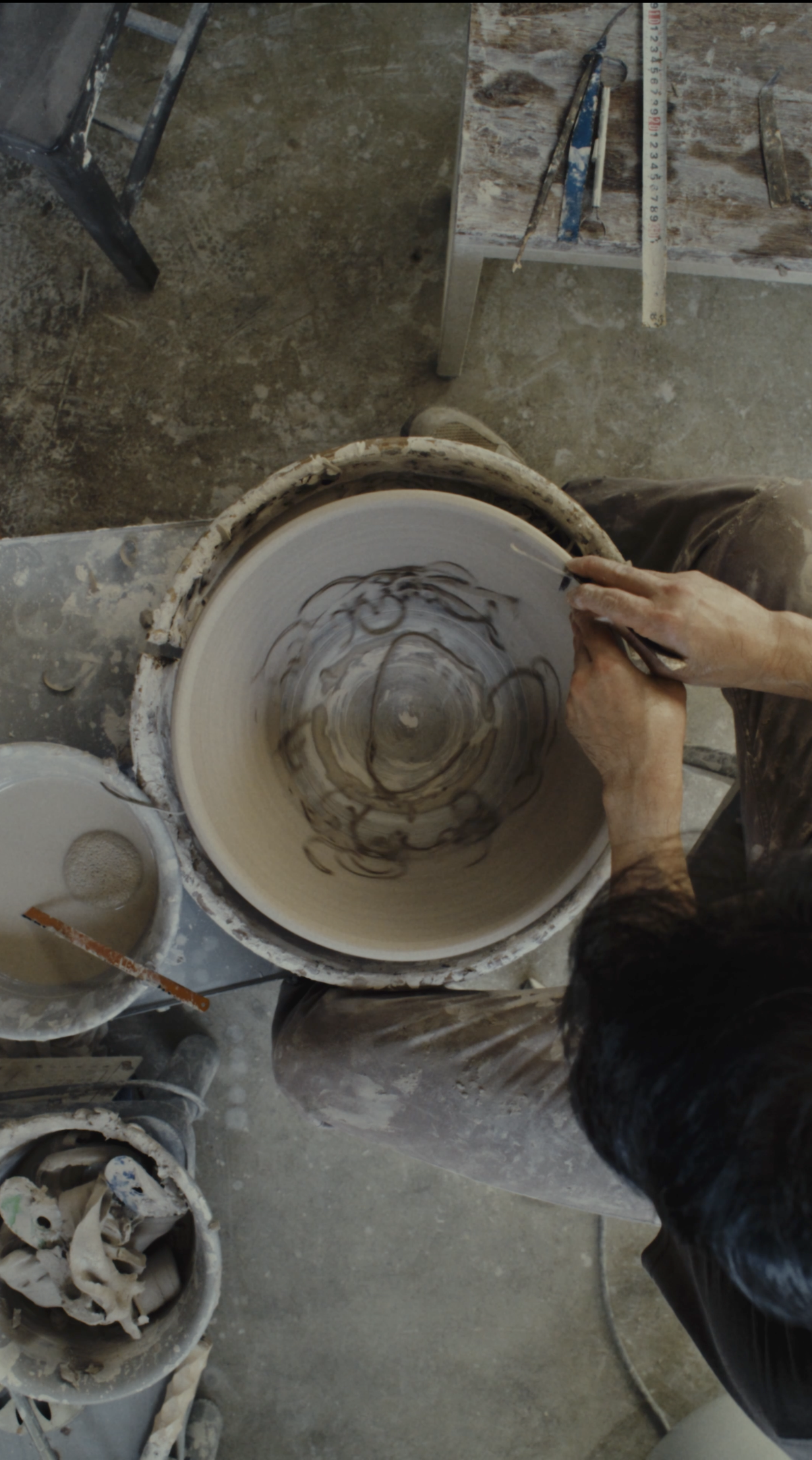
For the moon jar section, Moktan found a contemporary moon jar artist whose studio was located on the ground floor of a café he and his wife owned on the outskirts of Seoul.
After a series of conversations and planning discussions, the artist agreed to participate in the project and was extremely accommodating of the production’s requests.
The workshop provided an intimate environment for filming the process.
Moon jars are defined by their distinctive rounded form, traditionally created by joining two separately made hemispheres. The process of forming, shaping, and refining the clay became the focus of the footage.
As with every artist involved in the project, careful planning was necessary to ensure the production could capture the required visual moments without unnecessarily interrupting the working process.
Some aspects of traditional craftsmanship can be repeated.
Others cannot.
The Search for a Traditional Metalworker
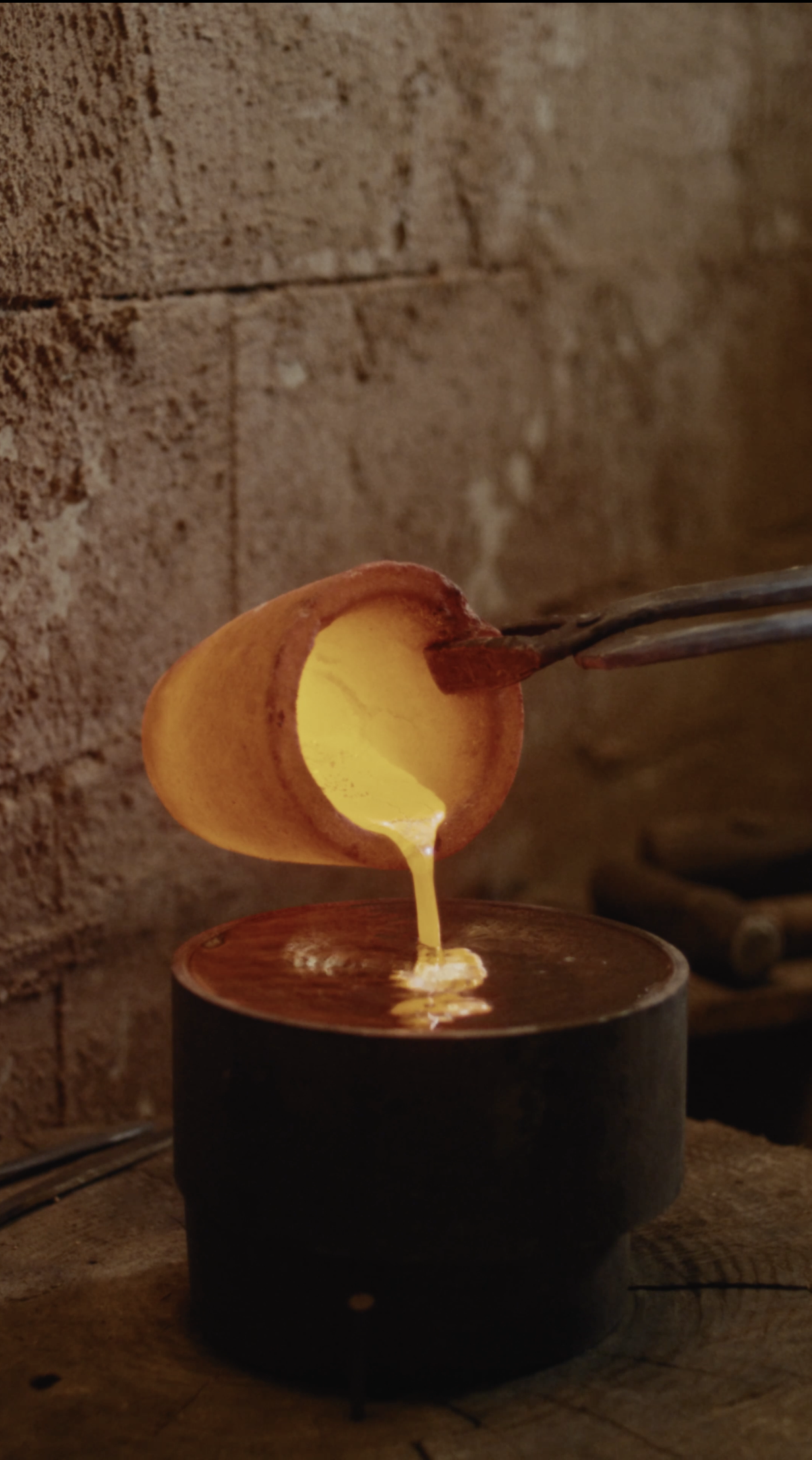
Traditional metalworking proved to be the most difficult discipline to secure.
Many of the workshops and traditional metalworking facilities contacted by Moktan did not operate during the summer months. The combination of Korea’s extreme summer heat and the high temperatures involved in metalworking made operating conditions particularly difficult.
The team contacted dozens of potential practitioners and workshops.
Eventually, we found a master in Dangjin who was willing to participate.
The shoot became one of the most physically demanding days of the entire production.
Filming During a Record-Breaking Heatwave
The entire production took place during one of Korea’s most extreme summer heatwaves.
Some regions recorded temperatures reaching 42.5°C, creating unusually difficult working conditions across the country. Every shoot involved high temperatures, heavy equipment, long travel days, and physically demanding work.
The metalworking shoot was particularly challenging.
Working beside a forge in already extreme summer conditions created an environment where the team and the artist needed to take regular breaks. We would film, pause to recover from the heat, and then continue.
Although the traditional method uses charcoal flame to melt the metal. The entire melting process takes multiple days. To accommodate our schedule, the metalworking master used a propane torch to melt the metal, in order for us to film in a timely manner.
At one point, the extreme temperature caused a propane hose to expand and loosen its connection to the propane torch. The torch slipped free, creating a large fireball. The metalworking master was burned in the incident. The team immediately shut off the gas, preventing the situation from becoming more serious. He went to the hospital for treatment. Although we told him that we did not need to continue the shoot, he returned.
His determination allowed us to complete the process, but it was also a reminder of the physical realities behind traditional crafts and the need to remain constantly aware of the conditions surrounding a production.
Capturing the Process Without Disturbing It
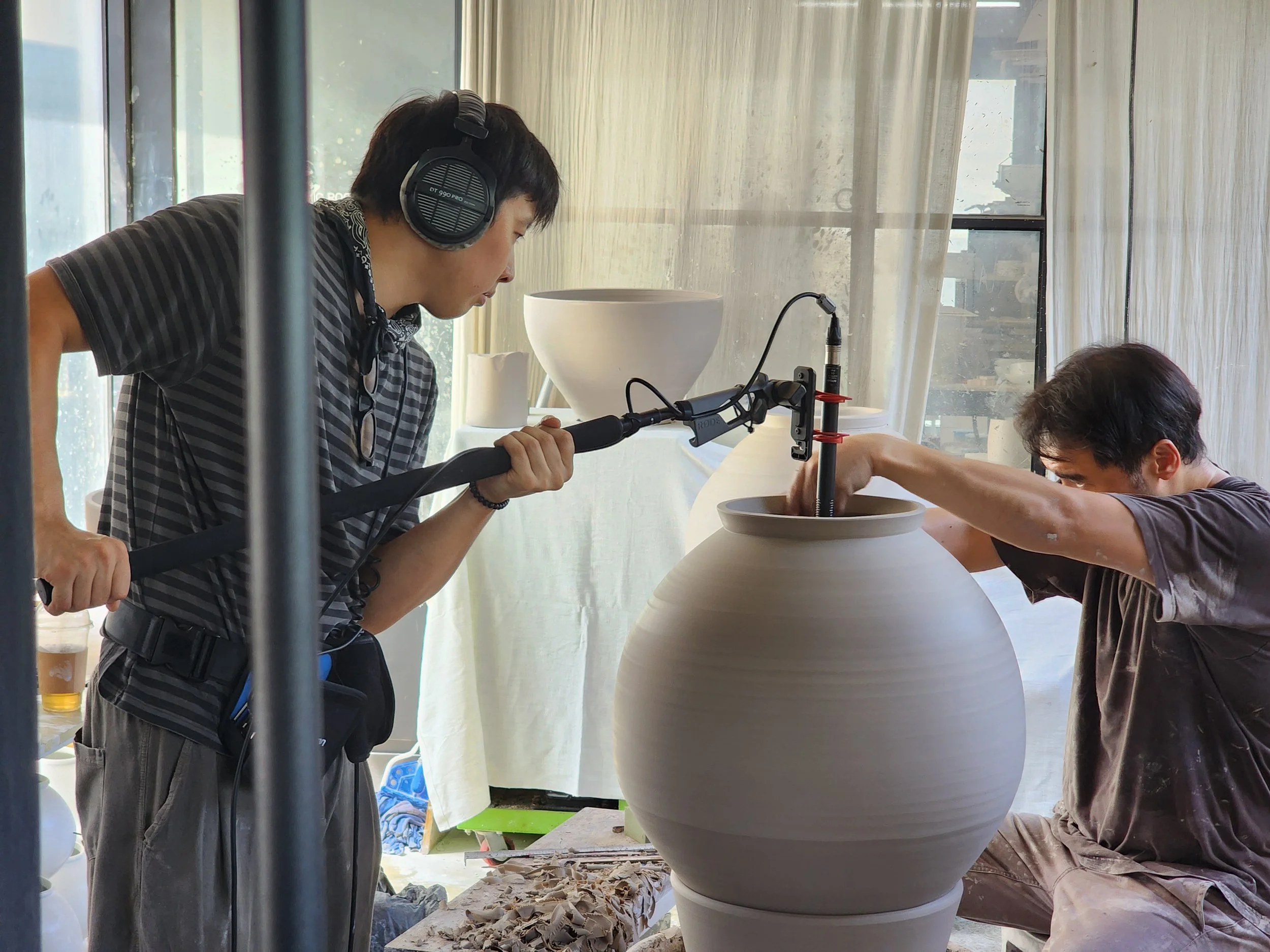
Across every shoot, one of the central challenges was capturing traditional processes while allowing the artists to work naturally.
The production required careful framing and mise-en-scène to preserve an authentic visual environment. At the same time, there were often modern objects, tools, or visual distractions within the workshop that did not fit the historical or traditional aesthetic of the final installation.
These elements needed to be managed through camera position and composition rather than by significantly altering the artists’ working environments. Lighting also required a careful balance.
The team needed sufficient control over the image to create a cinematic visual while avoiding unnecessary equipment or lighting setups that would disturb or hinder the artists.
The camera approach combined fixed tripod compositions with controlled handheld movement. A wide range of focal lengths was used to capture everything from detailed close-ups of hands and materials to wider environmental compositions.
During the project, Moktan used virtually every lens in our Canon FD lens kit. Different lenses allowed us to respond to the specific character of each process, bringing viewers close to the physical detail of the work while also revealing the environment in which each artist practiced.
Six Art Forms and More Than 2,000 Kilometres
The project required constant movement across Korea. Over the course of production, the Moktan team travelled more than 2,000 kilometres, covering five different provinces. That is approximately four times the length of South Korea and nearly twice the length of the entire Korean peninsula.
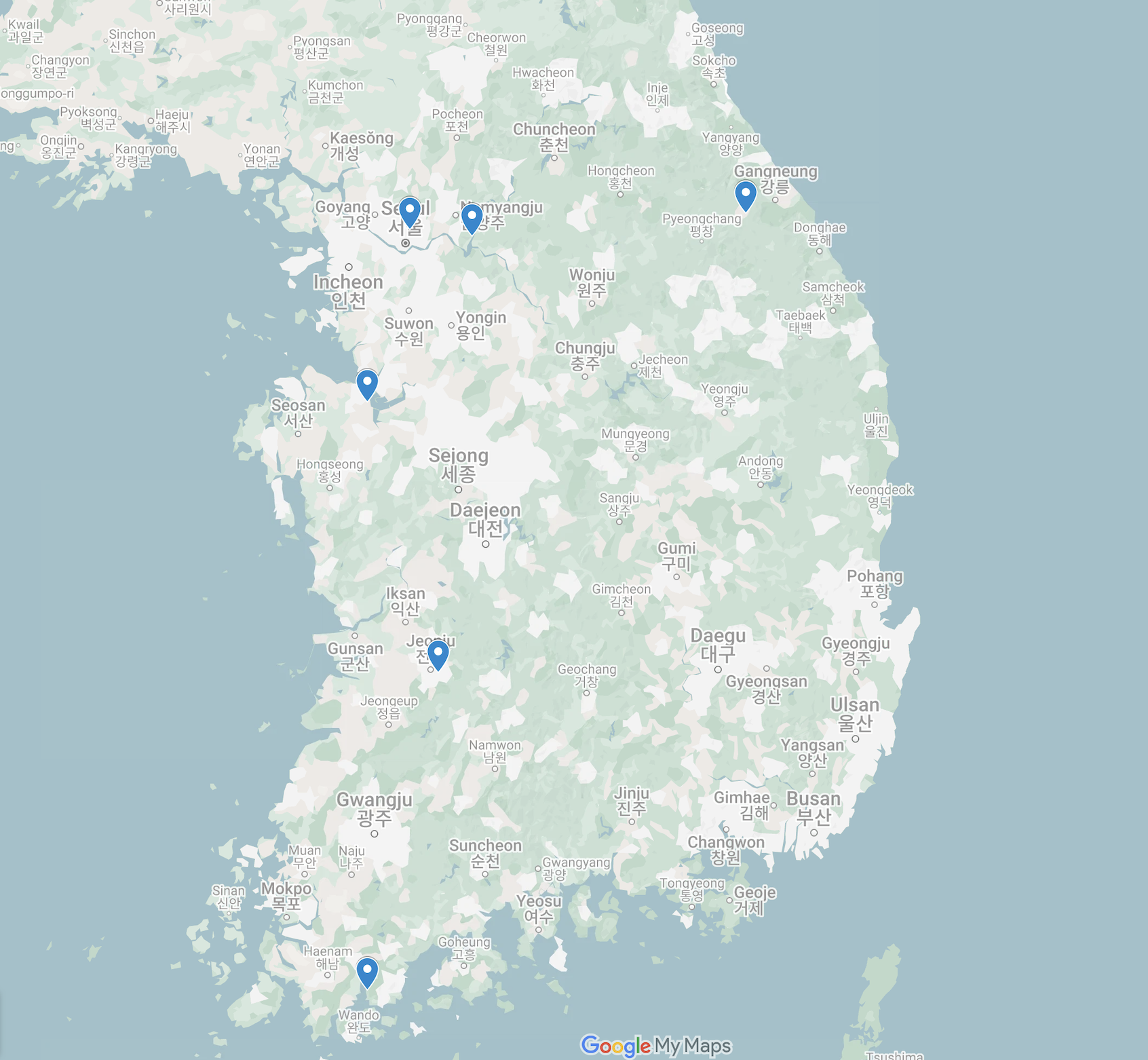
The travel itself was only one part of the challenge.
While one shoot was taking place, other sections were still in pre-production. Artists were being researched and contacted, institutions were being approached, schedules were being coordinated, and contemporary footage still needed to be filmed between traditional art shoots.
The production became a constant balancing act. Moktan had to manage multiple separate shoots at different stages of development while maintaining communication with the British Museum team and preparing material for review and testing. This required detailed coordination across the entire production.
Designing for Three Vertical Screens
Filming the individual art forms was only one half of the project.
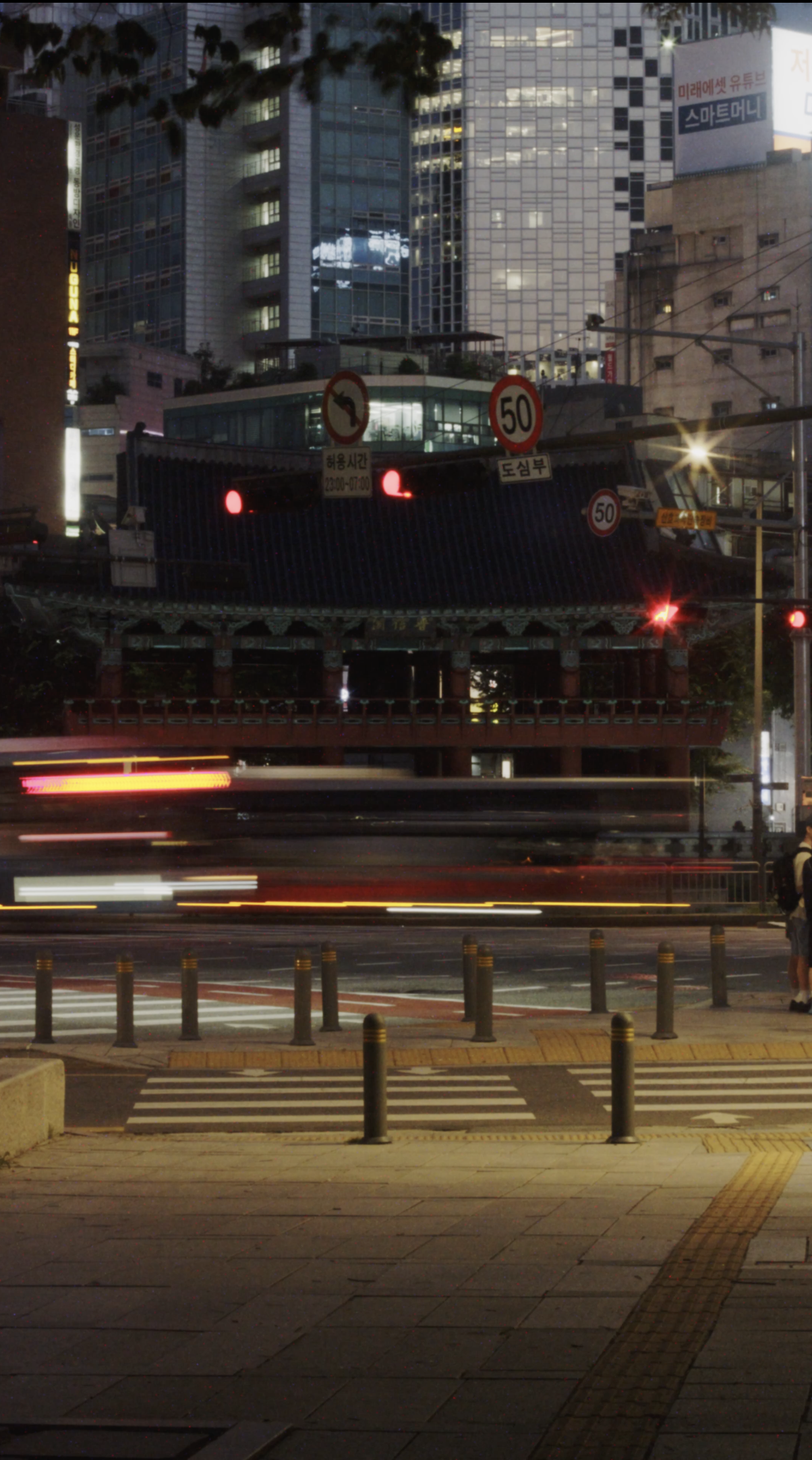
The material needed to work as part of a highly specific installation format. The final piece was designed for three vertical screens positioned together. Each screen had a different narrative role, but the installation needed to feel like a single visual experience. This created several challenges during production and post-production.
Footage needed to be framed vertically from the beginning, with careful consideration of how individual compositions would interact with the two screens beside them. The historical object, artistic process, and contemporary interpretation needed to remain visually distinct while feeling connected. The entire installation also needed to move through six sections in only 90 seconds.
Finding the Right Moments
Each 15-second section had to communicate an enormous amount of information.
There was limited room for long sequences or extended demonstrations. In many cases, only two or three shots per screen could be used. This meant the editorial process required difficult decisions.
The question was not simply which shot looked best. Each shot needed to communicate something specific about the process, work in harmony with the historical object and contemporary material, and contribute to the overall pacing of the installation.
The strongest shot for one screen could feel disconnected when viewed alongside the other two. Therefore we needed to think about the installation horizontally as well as vertically. A single composition might work perfectly on its own but create an imbalance when viewed as part of the full three-screen installation.
Creating One Installation, Not Three Separate Videos
One of the most important challenges in post-production was making the three screens feel coherent. The installation could not feel like three independent videos playing next to each other. Each screen needed to have its own visual role while contributing to a shared rhythm.
Transitions between the six sections were particularly important. The installation moves between different materials, locations, techniques, colours, and visual environments. Metalworking and celadon have completely different physical qualities. Sutra calligraphy, woodblock printing, and moon jar making each move at different speeds and involve different forms of movement.
The edit needed to create a flow between these contrasts without making the transitions feel abrupt or jarring. Pacing, shot selection, movement, and visual balance all became essential. The goal was to create a harmonious installation where the three screens felt like parts of one larger composition.
Experience and Knowledge as a Production Advantage
This project demonstrated the importance of production experience and detailed knowledge of Korea.
The production was not built around easily accessible commercial locations or well-established talent agencies.
The team needed to find individual masters and practitioners, navigate institutional bureaucracy, communicate with research centres, and search through niche communities.
Different disciplines required completely different methods of research.
For celadon, official institutions and research teams provided a path forward.
For sutra calligraphy, online communities and personal connections were essential.
For traditional woodblock printing, the research involved understanding the difference between historical institutions, contemporary printmaking, and traditional block carving before identifying the right practitioner.
For printmaking and moon jar, social media acted as a bridge.
Finding the right person was only the beginning.
The team also needed to explain the project, communicate the intentions of the British Museum, build trust, and convince artists and institutions to allow filming within a demanding production schedule.
The project required the ability to work across these different environments while managing multiple shoots at the same time.
A Full End-to-End Production
Moktan supported the British Museum project from the earliest stages of research and pre-production through filming and final post-production.
The process involved finding artists and institutions, securing access, coordinating travel, filming traditional art forms and contemporary material, communicating with the client, and editing a large amount of footage into a tightly structured 90-second installation.
Every part of the project presented a different challenge.
The search for practitioners required research and local knowledge.
The shoots required sensitivity to artists and their processes.
The travel required careful scheduling.
The extreme weather required physical endurance.
The installation format required a specialised approach to shooting and editing.
What connected all of these challenges was the project’s central objective: to create a visual conversation between Korea’s past and present.
Bringing Korean Cultural Heritage to an International Audience
The opportunity to contribute to the British Museum’s Korea exhibition was particularly meaningful for Moktan.
As a Korea-based production company, we regularly support international projects filming in the country. This project was different because it brought together many of the things that define our approach to production.
It required research, cultural knowledge, local connections, creative problem-solving, technical production, and visual storytelling. More importantly, it offered an opportunity to help introduce Korean artistic traditions to an international audience.
The masters and practitioners we filmed represent traditions developed over centuries. Their work reflects an extraordinary depth of knowledge, patience, and skill. The contemporary screen of the installation then carries that conversation forward, showing how traditional Korean art continues to influence life and creativity today.
For Moktan, the project was an opportunity to work at every stage of that connection. From researching a craft to finding the right master. From travelling across the country in record-breaking heat to filming processes that could not simply be repeated. From carefully composing vertical frames to editing six different sections across three synchronized screens. The final installation was built around a simple but ambitious idea.
Korea’s artistic past is not separate from its present.
Through the artists who preserve these techniques and the contemporary culture they continue to influence, these traditions remain part of an ongoing creative story. Moktan was proud to help bring that story to life at the British Museum.
