Filming Artists: How Moktan Productions Documents Process, Craft and Creative Practice
Filming Artists: How Moktan Productions Documents Process, Craft and Creative Practice
9/1/26
One of Moktan Productions’ specialities, and one of the types of work we most enjoy, is producing films about artists.
Over the years, we have built a diverse body of work filming artists across different disciplines, including painters, sculptors, photographers, ceramicists, calligraphers, printmakers, metalworkers, craftspeople, and designers. These projects take us into studios, workshops, galleries, museums, and other working environments to document not only the finished work, but the process and thinking behind it.
Every artist and practice is different. So is every film.
A film about an artist may involve documenting the physical techniques used to create a piece, following a process from beginning to end, or recording the smaller rituals and repeated movements that define a practice. It may focus on materials and craftsmanship, or on the artist’s thoughts about memory, identity, history, inspiration, and the ideas that shape their work.
For Moktan, the objective is to find a filmmaking approach that allows the artist’s own world to influence the visual language of the film.
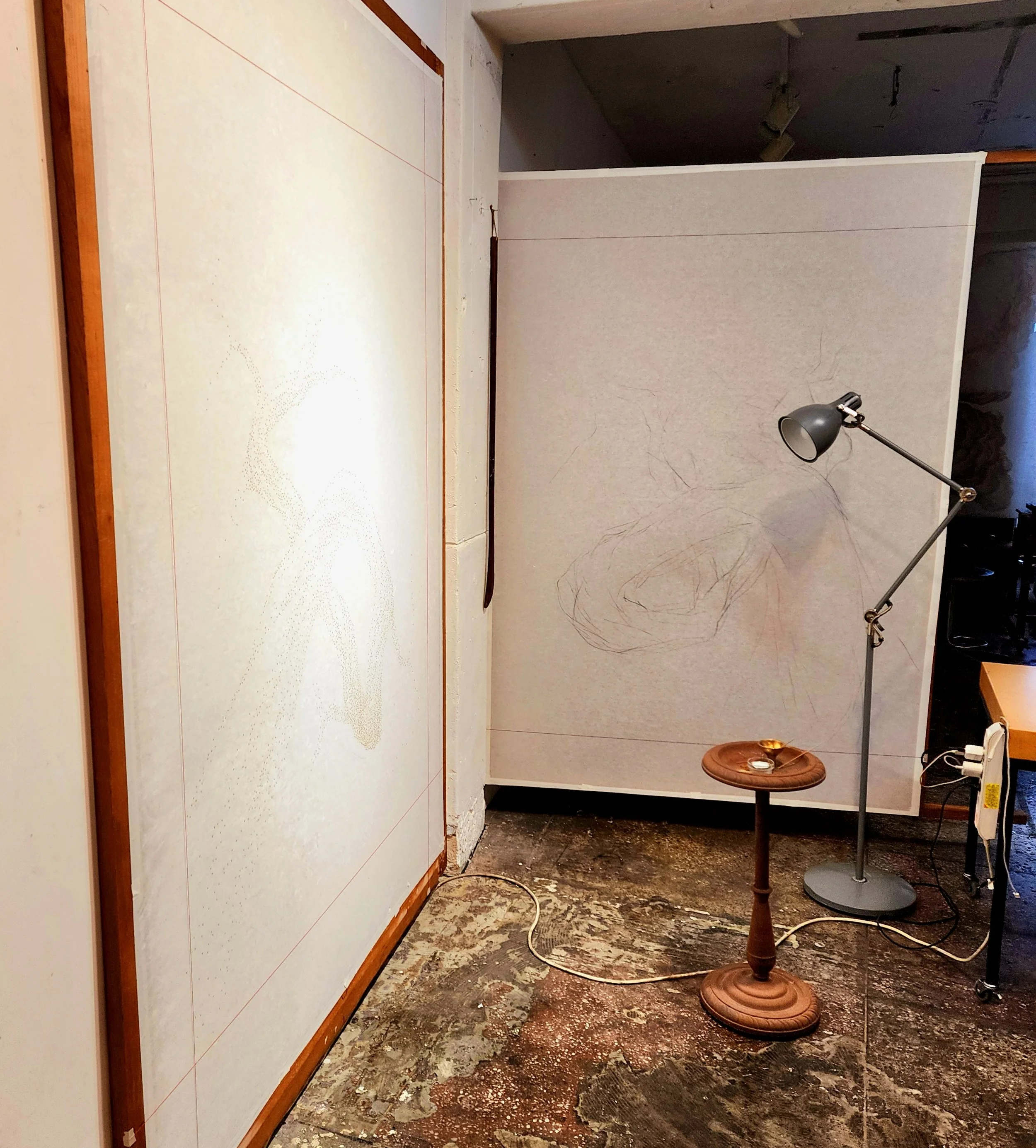
Incense artist Park Ji-hyun’s studio in Euljiro
Beginning with the Artist and Their Work
Before filming begins, we take time to research the artist and their practice.
Understanding the work is essential to understanding how to film it. We look at the themes within an artist’s practice, the materials they use, the processes involved, the environments they work in, and the history or philosophy behind the finished piece.
This research informs everything that follows.
The aesthetic of the artwork may influence our choice of lenses, camera movement, composition, lighting, colour, pacing, or editing. The material itself may become an important visual element. A film about ink, clay, metal, incense, paper, fabric, or paint should feel connected to those materials rather than simply documenting them from a distance.
Whenever possible, we allow the theme, aesthetic, materials, and spirit of the work to guide the film.
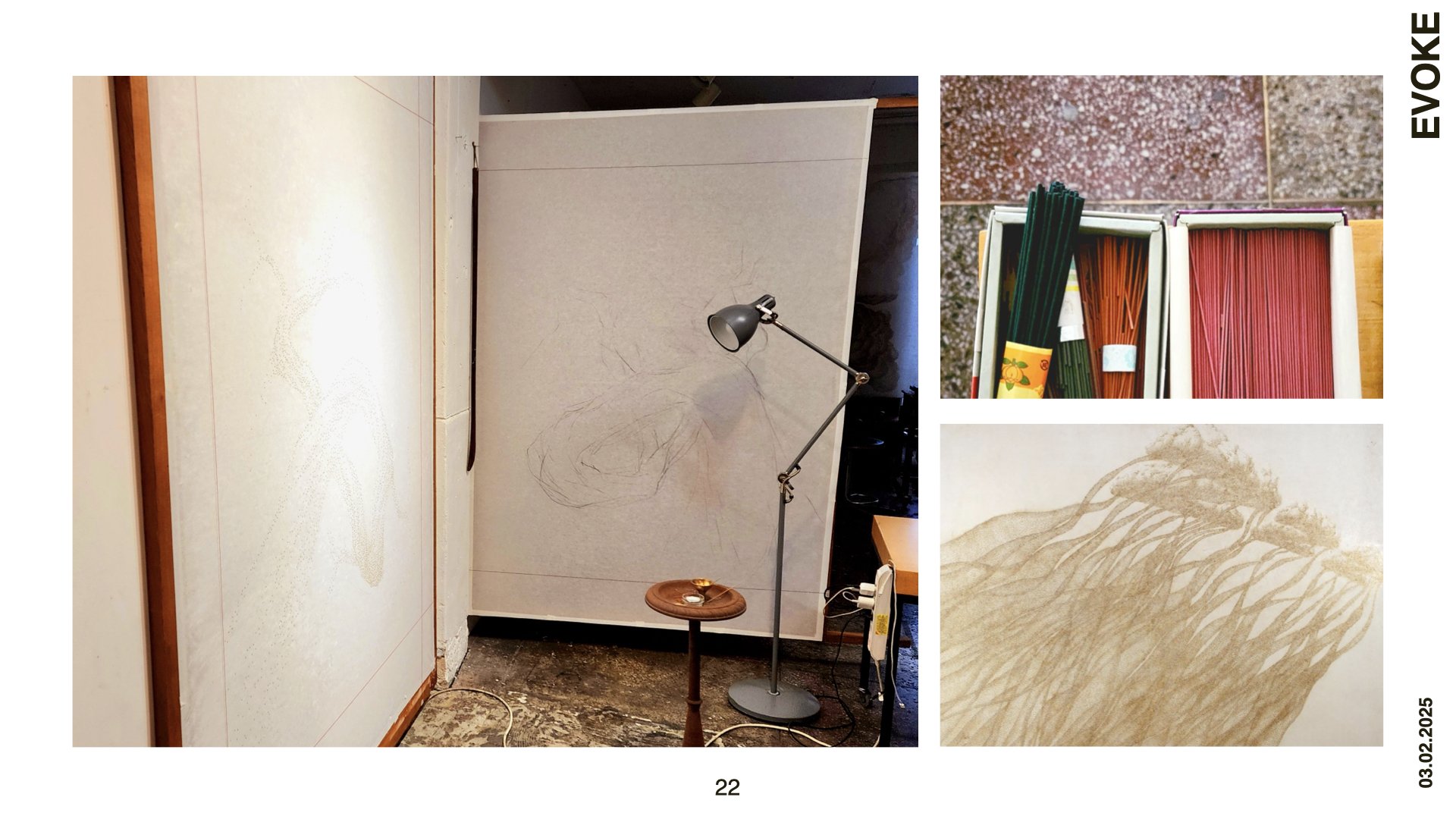
Park Ji-hyun’s studio, primary materials, and artwork
Documenting the Process Behind the Finished Work
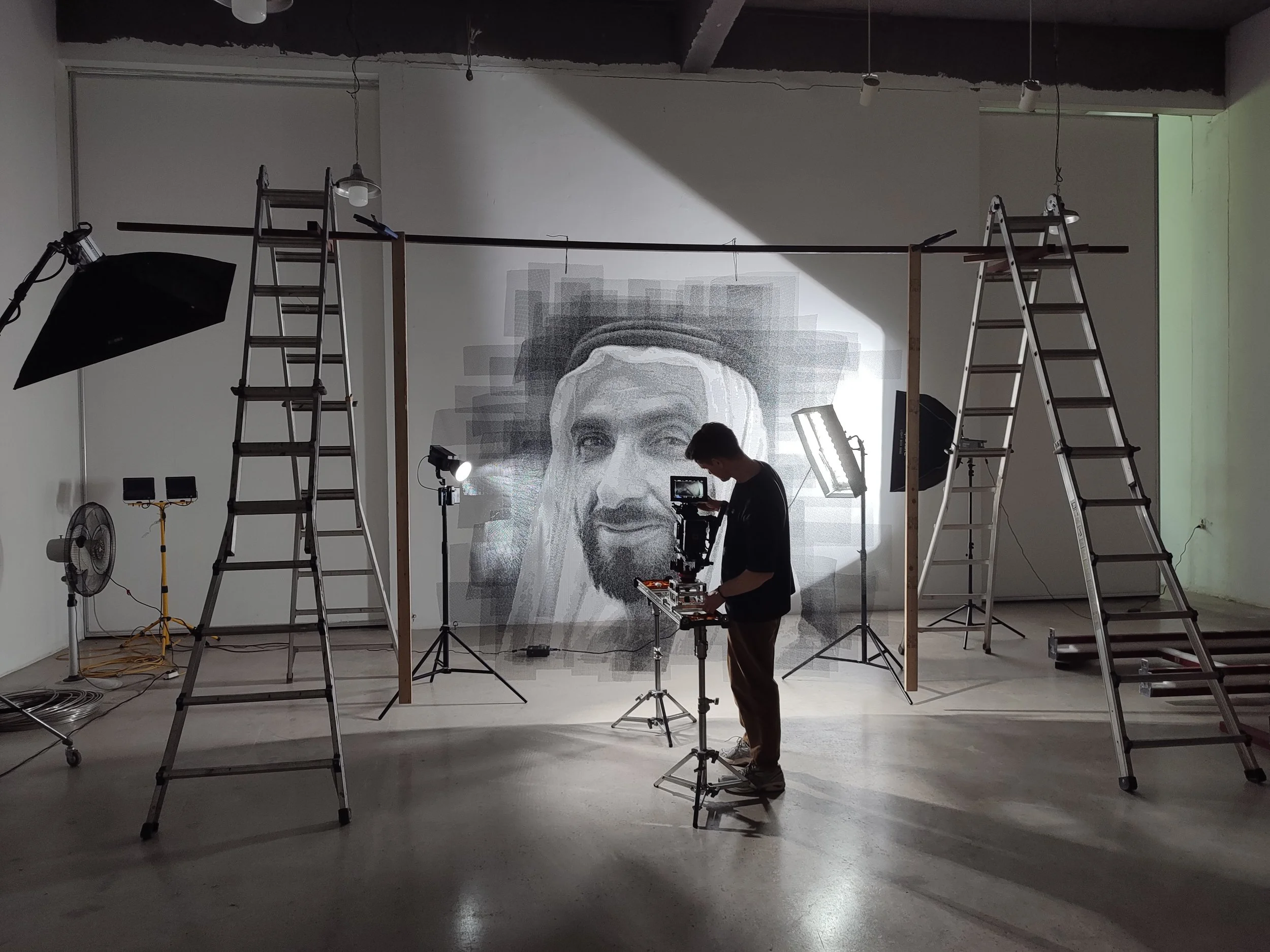
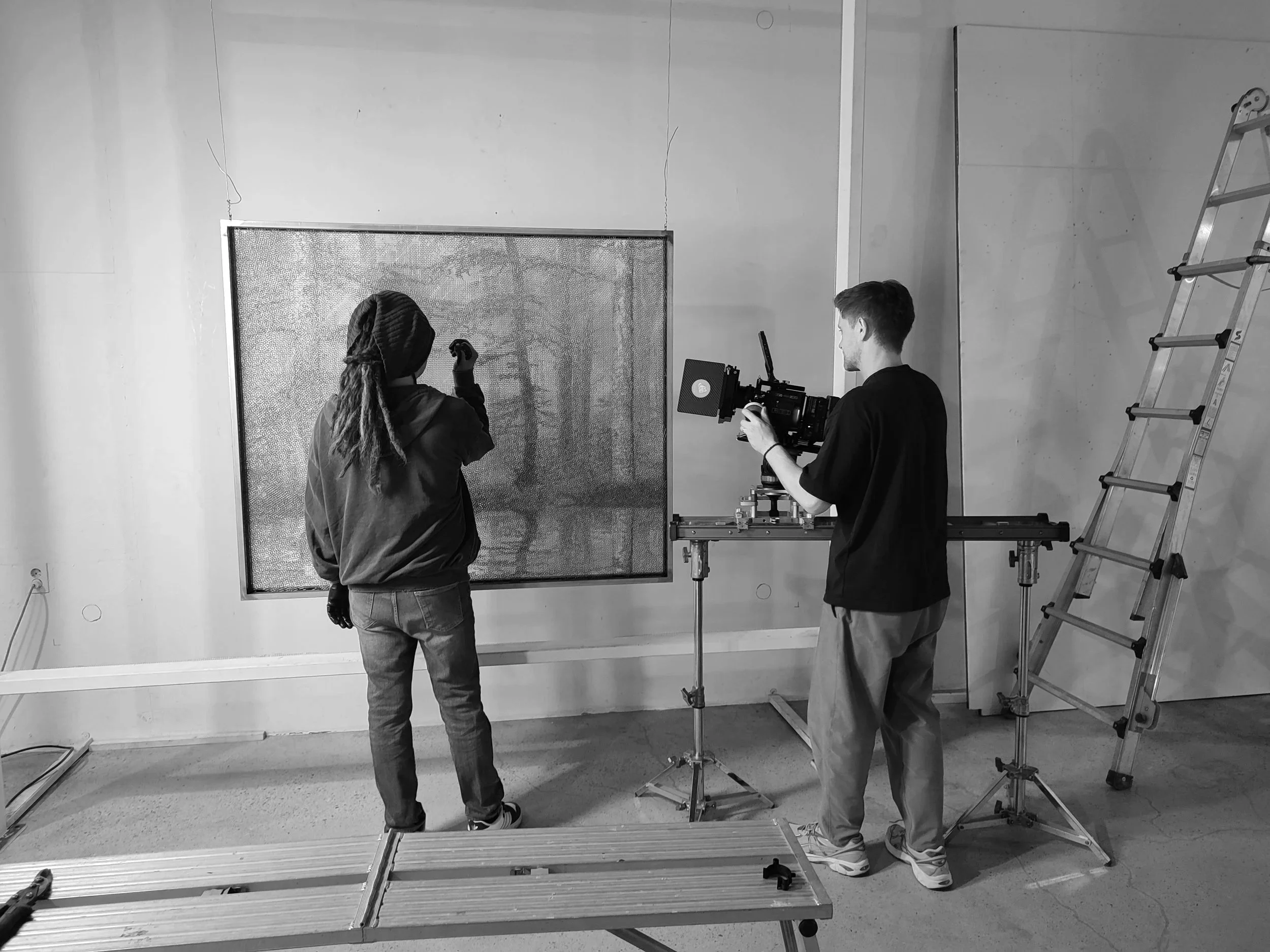
Filming in Park Seung-mo’s studio in Yeoju for Mubadala Art
One of the central questions in an artist film is often simple: how was this made?
But the answer is rarely simple.
Many artistic processes involve hours, days, months, or even years of work. Some consist of highly repetitive movements. Others happen quickly and cannot be repeated. A particular action may be possible to film only once, meaning there is no opportunity to ask the artist to stop, change position, or begin again.
This requires preparation and observation.
Before and during filming, we work to understand which parts of the process are most important to capture. We consider the larger sequence of events as well as the smaller details: a hand shaping clay, a blade moving across wood, ink touching paper, a material changing under heat, or the repeated action that gradually transforms a surface.
The goal is not simply to collect attractive shots. It is to build an understanding of the work through a combination of process, detail, atmosphere, and context.
Keeping the Production as Non-intrusive as Possible

Nubi master Kim Hae-ja
Artists are often working in environments that were not designed for film production.
A studio may be small, cluttered, dark, or filled with fragile finished and unfinished artworks. A workshop may have limited space for equipment. The process itself may require concentration, silence, or precise working conditions.
For this reason, our approach is often built around keeping the production as unobtrusive as possible.
Depending on the project, this may mean working with a smaller crew, minimizing lighting and equipment, or using camera systems that allow us to move through the space without constantly interrupting the artist. We aim to work as closely as possible to the artist’s natural environment and routine.
This helps preserve both the authenticity of the process and the comfort of the artist.
Of course, unobtrusive does not mean passive. We still carefully control composition, exposure, movement, and visual continuity. The challenge is to achieve this without turning a working studio into an artificial film set.
Building Trust and Understanding Boundaries
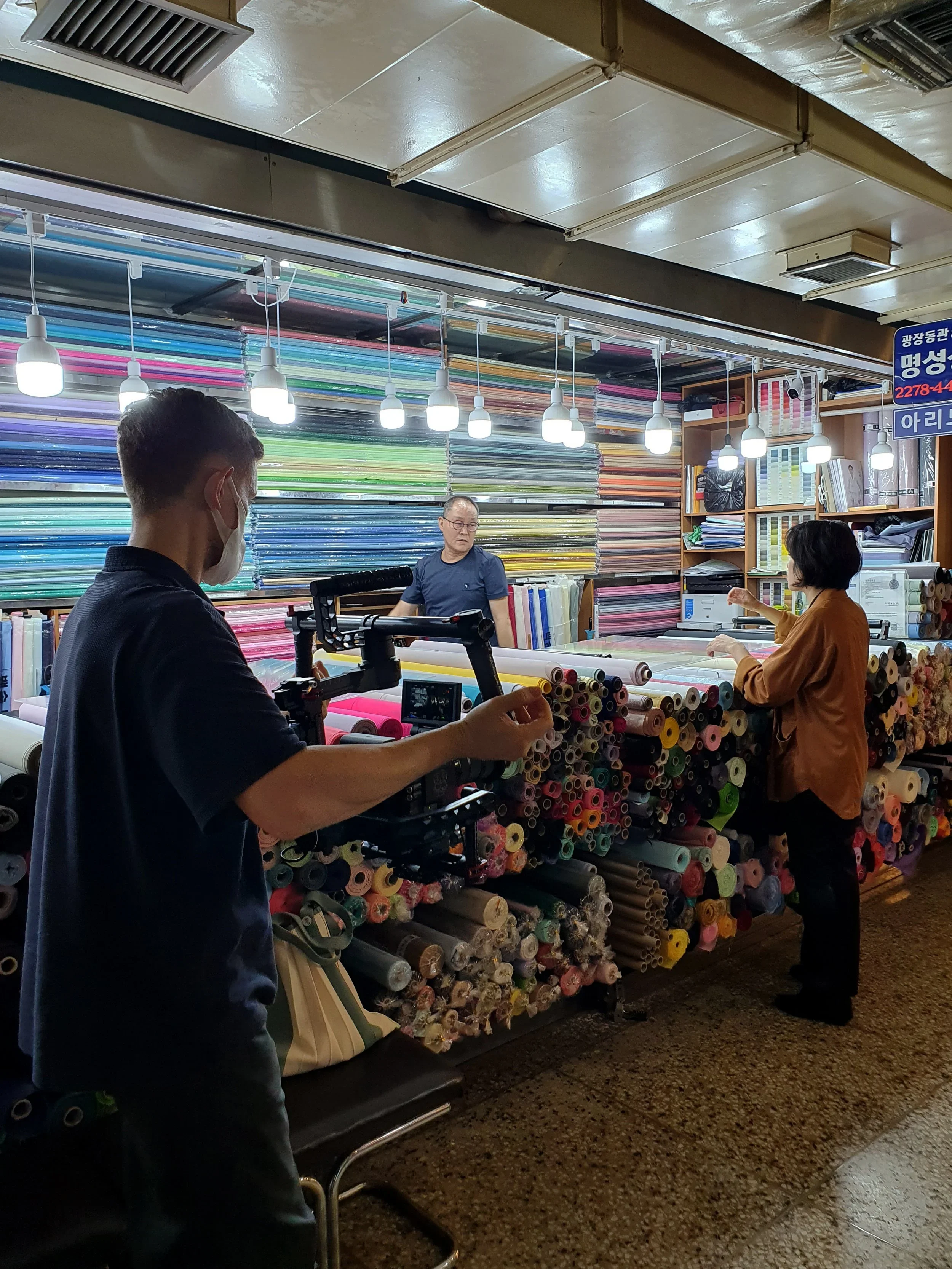
Filming with hanbok designer Park Seon-ock for the V&A Museum
Producing a film about an artist is built on trust.
Before filming, it is important to develop a clear understanding of what we are trying to capture, what the artist is comfortable sharing, and where the boundaries of the project are.
Some artists are happy to reveal every stage of their process. Others prefer to keep certain techniques private. A particular work may be unfinished, experimental, or still in development. Certain stages may be too personal, too technically sensitive, or simply not something the artist wishes to present publicly.
These boundaries need to be respected.
We work with artists to establish what can be filmed and what should remain private. This process also helps us identify where direction may be useful. In some situations, a movement or process may need to be repeated for the camera. A small degree of reenactment can help communicate a technique that would otherwise be impossible to capture.
The distinction is important. The objective is not to manufacture a false process, but to find a truthful way of filming one.
This requires an ongoing conversation between the artist and the production team.
When the Artist’s Process and the Client’s Vision Meet
Artist-focused productions often involve several perspectives.
The artist has their own understanding of their work and how it should be represented. The client may have a specific creative or brand vision. Moktan then has the responsibility of translating both into a coherent film.
Sometimes these perspectives align immediately. Sometimes they do not.
A client may imagine a particular shot, sequence, or interpretation of the artist’s process that does not fully reflect how the work is actually made. An artist may have concerns about a proposed approach, or may simply work in a way that differs from what was initially expected.
In these situations, our role is often to bridge the gap.
We communicate the client’s creative vision to the artist and explore whether it can be implemented in a way that remains truthful to the process. At the same time, we help the client understand the practical and creative realities of the artist’s work.
The solution is often found within the parameters of both.
This process requires flexibility, communication, and a clear understanding of the central idea of the film. Rather than forcing one perspective to override another, we work to find an approach that respects the artist while still achieving the objectives of the project.
Working Within the Artist’s Environment
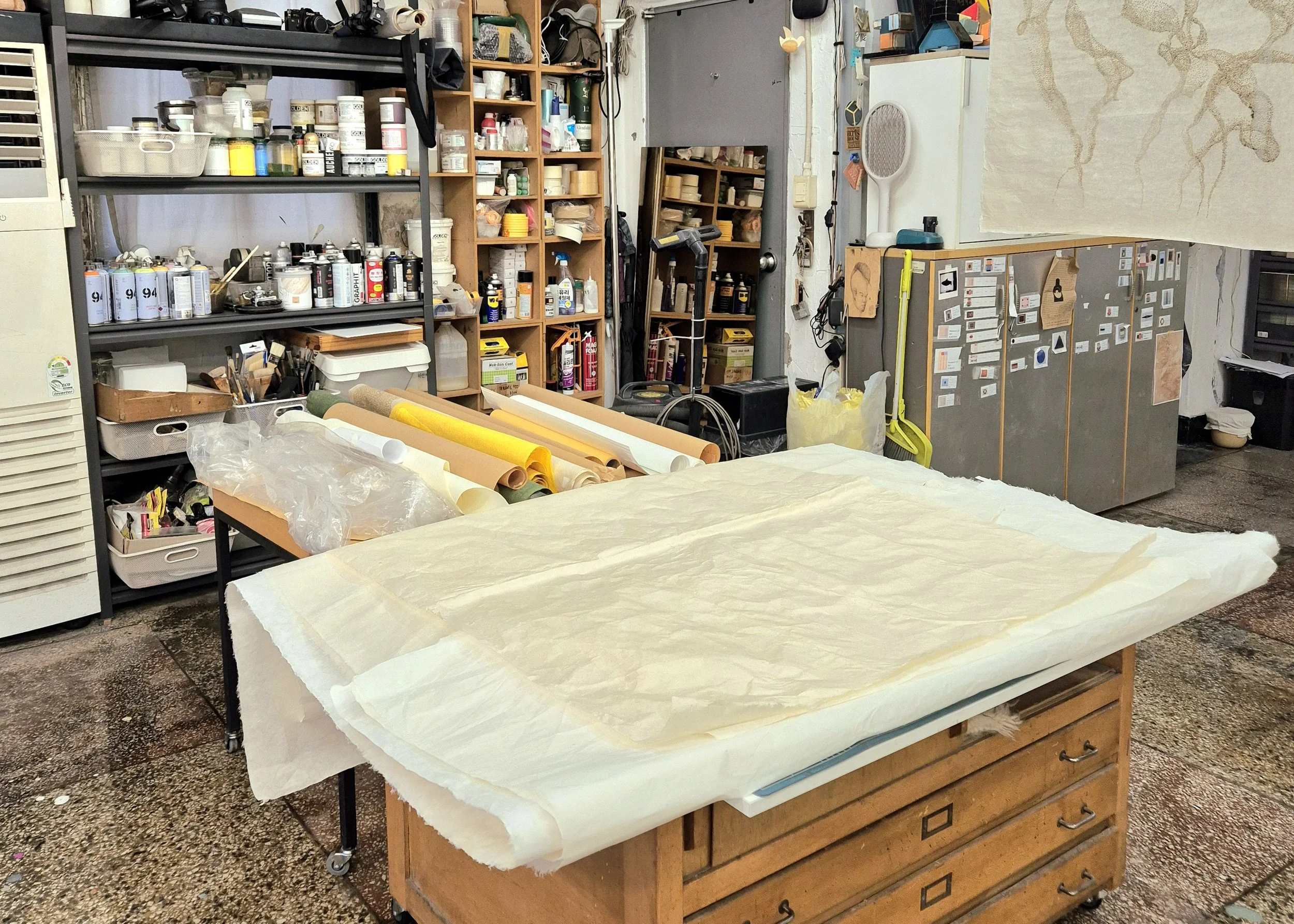
Park Ji-hyun’s workspace
Unlike a studio commercial, an artist film often gives us limited control over the location.
The studio is the artist’s space. Its layout, windows, available light, tools, works in progress, and general environment are part of the reality we are documenting.
We cannot always move everything, redesign the room, or install extensive lighting setups.
Instead, we work within those constraints.
This means carefully considering what belongs in the frame and what does not. It may involve adjusting camera angles to remove distracting contemporary elements while preserving the authentic environment. It requires sensitivity around both finished and unfinished artworks, which may be fragile or impossible to move.
Light is another common challenge. We often have to balance the existing atmosphere of a studio with the technical requirements of filming. Adding too much light can make the space feel artificial, while changing the artist’s working environment too dramatically can interfere with the process itself.
The visual approach is therefore a balance between truthfulness and aesthetic control.
Filming Artists as Filmmakers
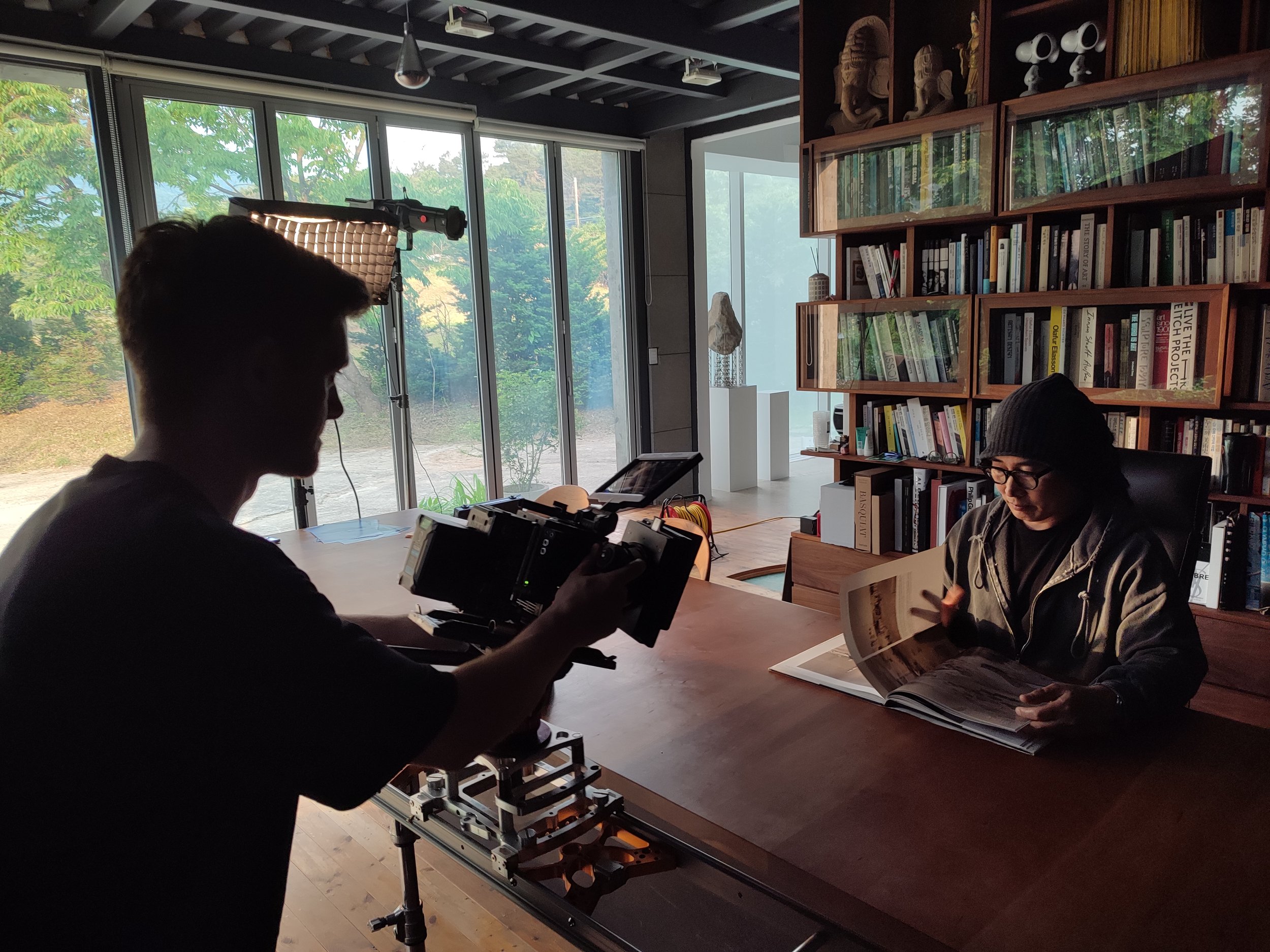
Park Seung-mo
There is a particular connection between working with artists and working as filmmakers.
Artists understand the importance of process. They understand repetition, experimentation, materials, mistakes, and the long journey between an initial idea and a finished work.
Filmmaking is not so different.
We approach an artist’s work with an appreciation for the fact that the process itself is meaningful. A brushstroke, a carved line, a burned mark, or a moment of preparation can be as important to the film as the completed artwork.
This shared understanding can help create a stronger relationship on set.
The aim is not simply to point a camera at an artist. It is to understand what they are doing well enough to make thoughtful decisions about how it should be seen.
Finding the Visual Language of Each Project
Ultimately, every artist film requires its own visual language.
A film about a ceramic artist may benefit from slow, observational movement and an emphasis on form and texture. A project about an experimental contemporary artist may call for a more dynamic or abstract approach. A documentary about a traditional craft may require close attention to technique and historical context.
There is no single template.
The final film is shaped through the combination of the artist’s practice, the client’s objectives, and Moktan’s own creative perspective. Camera movement, lenses, framing, sound, interviews, pacing, and editing all contribute to this process.
The best artist films do not simply document a piece of art. They create a viewing experience that feels connected to the world from which that work emerged.
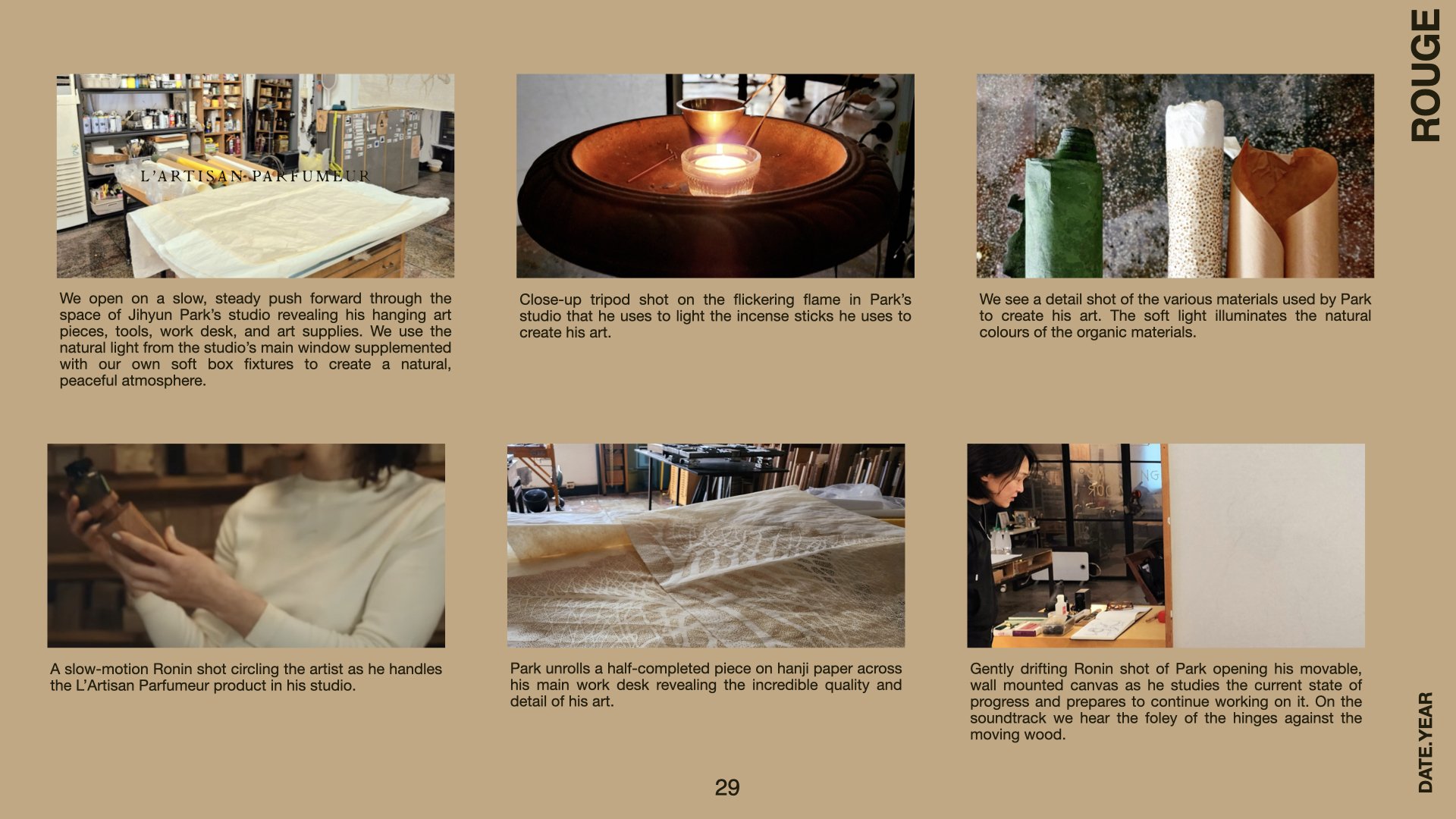
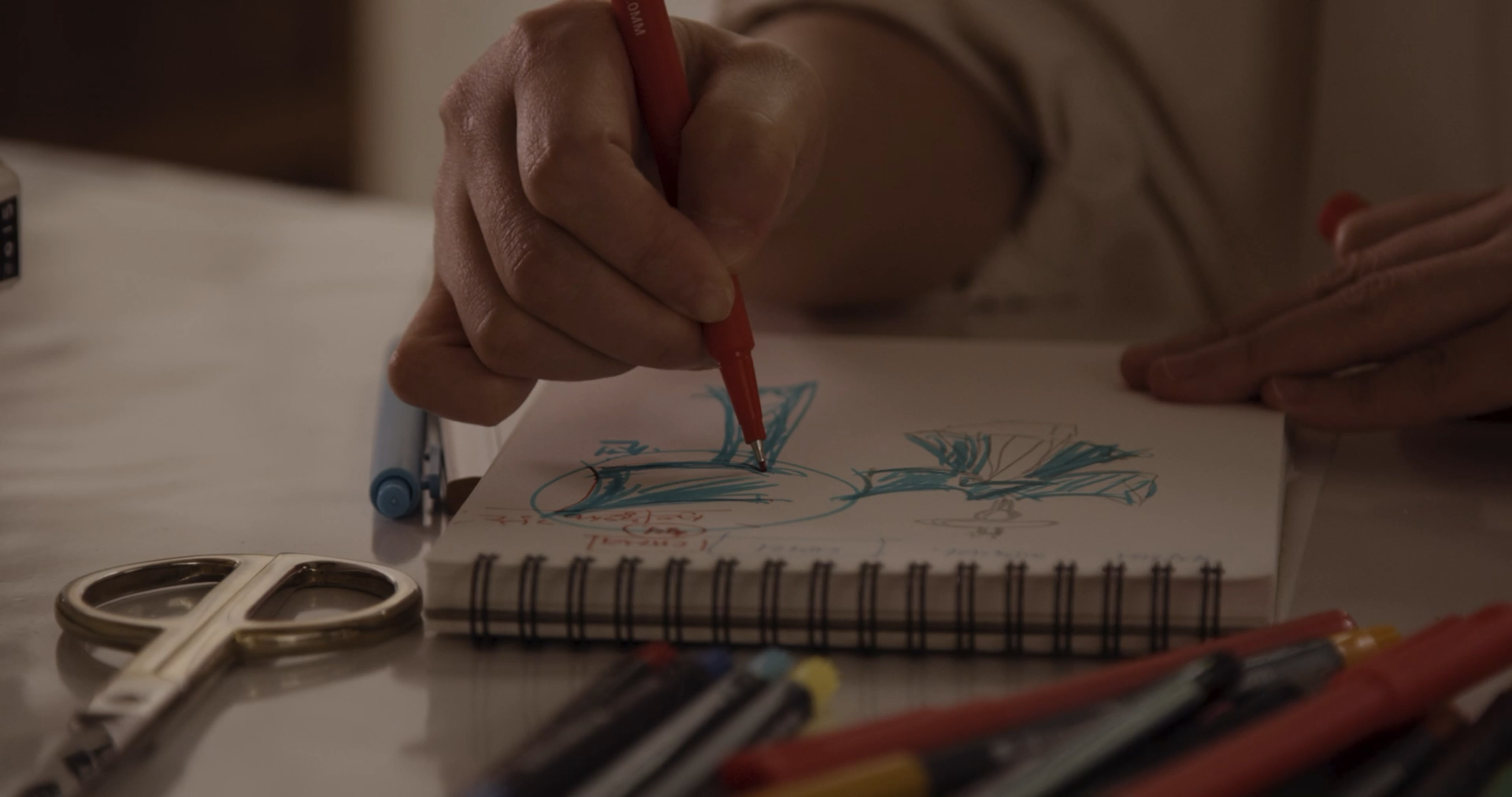
Storyboard for L'Artisan Parfumeur's 'La Cérémonie de l’Encens'
A Continuing Part of Moktan’s Work
From contemporary collaborations to traditional crafts, artist-focused filmmaking has become an important part of Moktan Productions’ work.
These projects combine many of the elements that define our broader approach to production: research, careful preparation, visual sensitivity, documentary observation, and the ability to adapt to real-world conditions.
Most importantly, they are collaborative.
Every artist brings their own environment, process, philosophy, and way of seeing the world. Our role is to understand that world, work within it respectfully, and translate it into film.
For Moktan, documenting artists means more than showing how something is made.
It means creating space for the artist’s process, materials, thoughts, and finished work to speak for themselves, while using filmmaking to connect those elements into a clear and meaningful visual story.